
A back-to-school declutter checklist for busy families
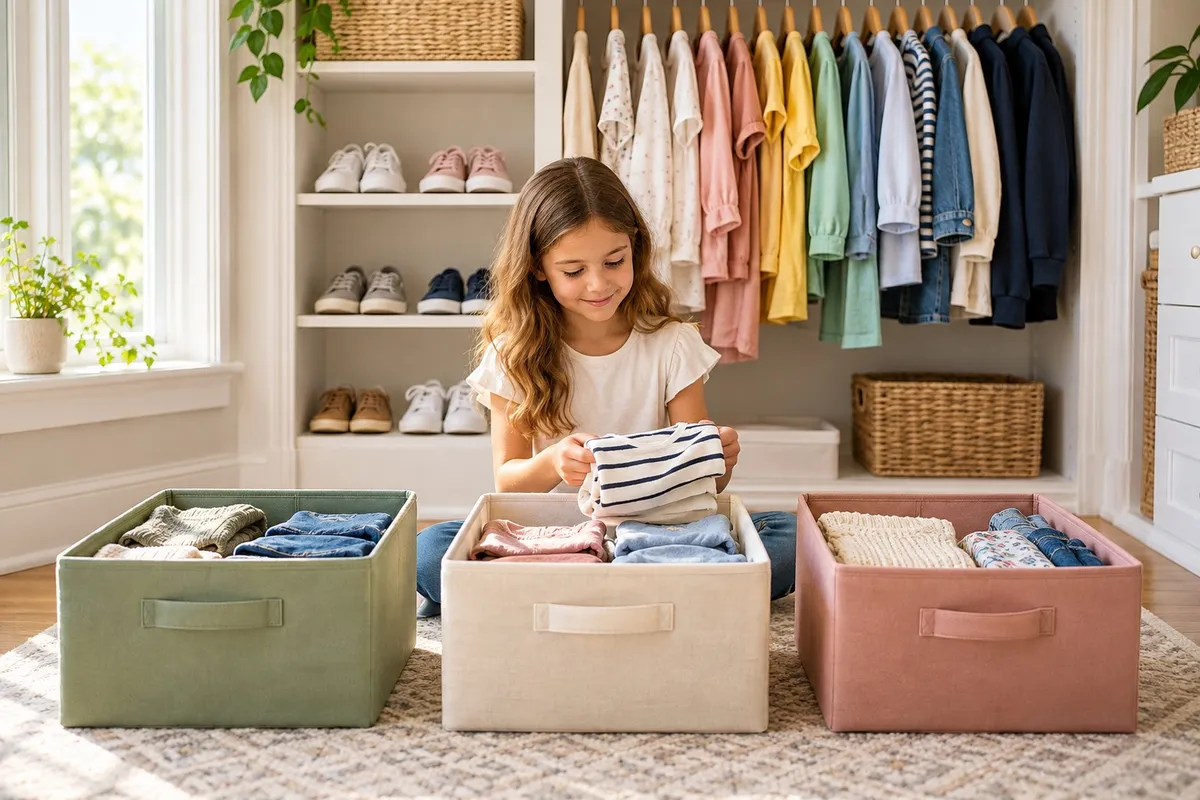
A back-to-school declutter works well as one zone a day for the two weeks before school starts: kids' closets, dressers, the entryway drop zone, the lunch station, the school supply drawer, papers and artwork, sports gear and toys. Give each one 30 to 45 minutes with three boxes (keep, donate, outgrown) and a trash bag, and the house is ready before the first bell.
Doing it a zone a day means no lost Saturday and no shopping for things you already own.
The back-to-school declutter checklist
- Kids' closets. Try-ons for anything in doubt. Keep, donate, outgrown.
- Dressers. Socks without partners, stained T-shirts, swimsuits that won't fit next summer.
- The entryway drop zone. Shoes, backpacks, jackets, keys.
- The lunch station. Lunchboxes, water bottles, containers and lids.
- The school supply drawer. Dried-out markers, broken crayons, half-used notebooks.
- Papers and artwork. Last year's worksheets, art and forms.
- Sports and activity gear. Cleats, shin guards, uniforms, instruments.
- Toys and the playroom. What they've outgrown and what hasn't been touched since spring.
Print it, stick it on the fridge and cross off a zone each day.
How do you declutter kids' closets for the new school year?
This is the zone that saves money, because you find out what they actually need before you shop.
- Do try-ons for anything you're not sure about. Kids grow over the summer. Pants that fit in June often don't in August.
- Sort into three boxes. Keep, donate and outgrown. The outgrown box is for clothes in good shape that a younger sibling or cousin will use.
- Label the outgrown box by size, not by child. "Boys 6" is easier to find in two years than "Jake's old stuff."
- Keep a running list on your phone of what's missing: sneakers, a rain jacket, uniform pants. That's your shopping list.
- Hang school clothes together at the front of the closet, by color or by outfit, so mornings go faster.
Many school-age kids can make the keep or donate call on their own toys and clothes, with you holding the final vote on anything that still fits.
How do you set up an entryway drop zone?
The drop zone is wherever the backpacks land when the kids walk in. You probably have one already. It just isn't set up for school.
- One hook per child at their height, for the backpack and jacket.
- One bin or basket per child for shoes, so the pile by the door has a limit.
- A tray for keys, permission slips and anything that needs a signature.
- Clear out the summer gear, like beach towels, flip-flops and sunscreen, and store it until next year.
If it doesn't fit in the hook or the bin, it goes to the bedroom.
How do you declutter the lunch and snack station?
Pull every lunchbox, water bottle and food container out of the cabinet. Match lids to containers and recycle anything that doesn't have a partner. Toss bottles with chewed straws or lids that leak.
Give lunch gear one shelf or one bin, with snacks in a second bin kids can reach. If they can see it and reach it, older kids can pack their own.
What do you do with school papers and artwork?
Papers pile up fast in a house with school-age kids.
- Recycle last year's worksheets and completed homework.
- Keep a few pieces of artwork per child in one bin or folder per school year. Photograph the rest before it goes.
- Set up one inbox for this year's forms and notices, ideally in the drop zone tray, so nothing important lands on the counter.
What about sports gear and activities?
Fall sports and activities start at the same time as school, and the gear tends to end up in the car and the hallway.
- Try on cleats and pads now. Feet grow over the summer too.
- Give each sport its own bin in the garage or mudroom, with the uniform, water bottle and gear together.
- Pass on what doesn't fit to a younger teammate or a team swap.
Air out pads and cleats on a rack or a shelf, not in a closed bag, so they dry between games.
How do you get kids to help?
Make it short and specific. "Pick five toys to donate" is a job a child can finish. "Clean out your closet" is not. Put on music, set a 20-minute timer and stop when it goes off. Let them carry the donate box to the car themselves. For daily habits once school starts, see our 10-minute school-day reset routine and the kid's bedroom clean-up checklist.
Where does a house cleaning fit in?
Organizing and decluttering aren't on any of our cleaning checklists, and counters, shelves and tables are wiped where they're clear of clutter. Once the zones are cleared, the cleaning reaches more of the house.
On Standard House Cleaning, RoutineCare, the floors are vacuumed and mopped, reachable surfaces and furniture are dusted, mirrors and glass surfaces are cleaned, and window sills are wiped. It can be booked one time, weekly, every other week, every 4 weeks or twice a year.
See House Cleaning, or Recurring House Cleaning for cleanings on a schedule through the school year.
FAQ
When should you declutter before school starts? Start about two weeks before the first day and do one zone a day for 30 to 45 minutes. That leaves time to shop for what's actually missing once you've seen what you have.
How do you declutter kids' clothes for the new school year? Have them try on anything you're unsure about and sort into keep, donate and outgrown. Box outgrown clothes by size for younger siblings, and make a short list of what they still need.
What should I do with old school papers and artwork? Recycle worksheets and keep a few pieces of artwork per child in one bin or folder per school year. Take photos of the rest before they go.
Do house cleaners help with decluttering? Organizing and decluttering aren't on any of our cleaning checklists, and surfaces are wiped where they're clear of clutter. Clear the zones first, and the cleaning covers more of the house.
Book a house cleaning
We clean homes across South Jersey and Central Jersey. Book online at tinascleanteam.com/book-now, or call or text (609) 831-4455, Monday to Friday, 9 AM to 5 PM.
