

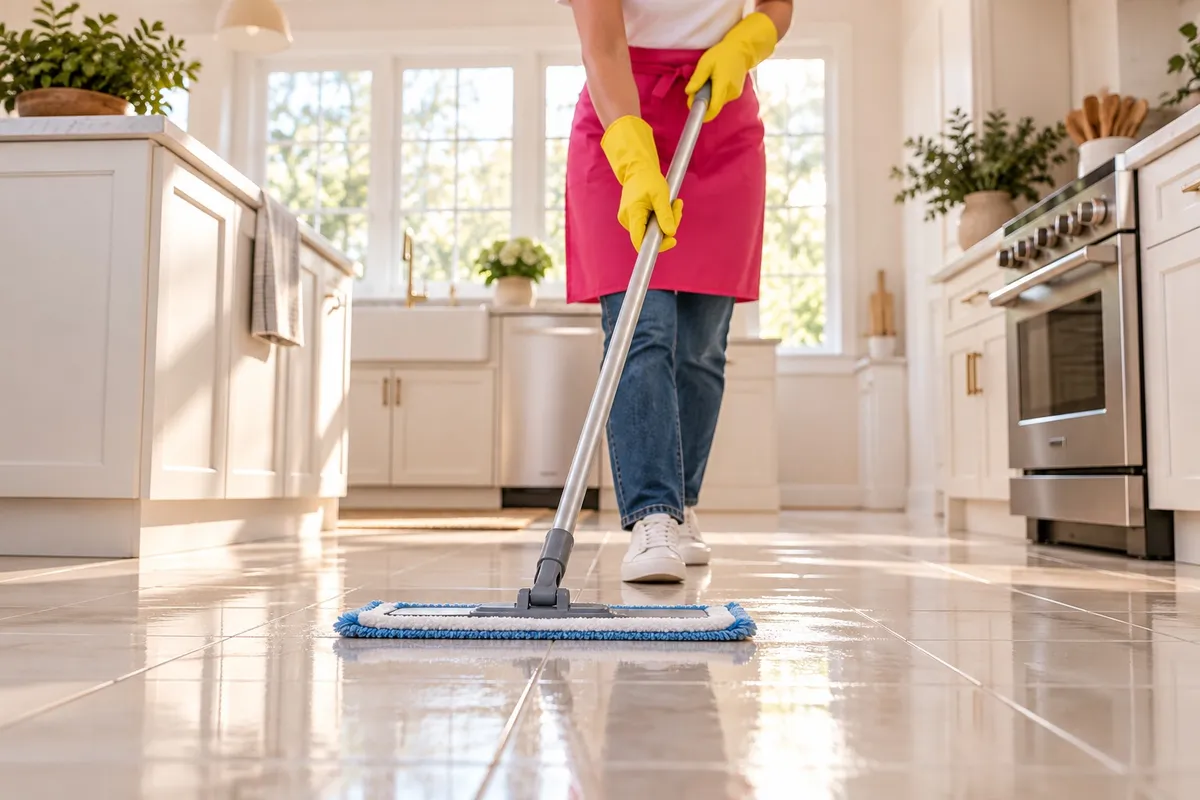
How to mop a floor without streaks or a sticky film
To mop floors properly, vacuum or sweep first, then use a damp mop, not a wet one, with a small amount of cleaner made for your floor. Start in the far corner and work back toward the door, rinse the mop often, and change the water as soon as it turns gray. Let the floor air dry before anyone walks on it.
Streaks and sticky floors come from too much: too much water, too much soap, or too much floor covered with the same dirty water.
What do you need to mop a floor?
- A vacuum or broom. Mopping over grit turns it into mud and scratches the finish.
- A flat microfiber mop with two or three washable pads, or a string mop for large tile floors
- A bucket, or two if you use a string mop: one for cleaning solution, one for rinsing
- Warm water
- A cleaner made for your floor, or a few drops of dish soap for sealed tile and vinyl
- A cloth for edges, corners and the spot behind the toilet
How do you mop a floor, step by step?
- Clear the floor. Chairs up on the table, rugs rolled back, pet bowls moved.
- Vacuum or sweep everything. Go along the baseboards with the crevice tool. Hair and grit collect at the edges, and a mop only pushes them into a line.
- Mix the solution. Follow the label, and lean toward less. Warm water with a capful of cleaner does more than a bucket of suds.
- Wring until damp. A flat pad should feel like a wrung-out washcloth. Water sitting on the floor means it's too wet.
- Start in the far corner. Work toward the door so you never step on the clean part.
- Use a figure-eight stroke. With a flat mop, keep the same edge leading and move in an S or figure-eight pattern. The dirt stays in front of the pad instead of spreading behind it.
- Rinse and swap often. Swap the pad when it looks dirty, or rinse the string mop in the second bucket before dipping it back in the solution.
- Change the water. If it's gray or cloudy, you're putting dirt back down.
- Do the edges by hand where the mop can't reach, like around the toilet base and under the cabinet toe kick.
- Let it dry. A fan or an open window speeds it up. Put the furniture back once it's fully dry.
A kitchen floor takes about 10 to 15 minutes this way once it's vacuumed.
How should you mop each type of floor?
- Sealed hardwood: barely damp, with a pH-neutral wood cleaner. Water soaks into wood seams. No steam mops, no vinegar, no oil soaps that leave a dull film.
- Laminate: the same as hardwood, and even drier. Water in the seams makes laminate swell and lift at the edges.
- Vinyl and luxury vinyl plank: warm water with a little mild cleaner. Skip wax and "shine" products, which build up.
- Ceramic and porcelain tile: more water is fine here. Pay attention to the grout lines, and rinse so cleaner doesn't dry in them.
- Natural stone (marble, travertine, slate): a pH-neutral stone cleaner only. Vinegar, lemon and many all-purpose sprays etch the surface.
When in doubt, check the flooring maker's care instructions. They're often online by product name.
For more on each surface, see our guide to caring for different types of living room flooring.
What mistakes make mopping worse?
- Skipping the vacuum. A mop can't lift grit. It only moves it around.
- Adding extra soap for a dirty floor. It leaves a residue that makes the floor sticky and dirty again in days. If the floor is sticky now, mop once with plain warm water to lift the old film.
- Mopping the whole house with one bucket. By the third room you're spreading kitchen grease into the bedroom.
- Steam on wood or laminate. Heat and moisture get into seams and finishes.
- Letting puddles sit. Standing water marks wood and gets under vinyl edges.
- Putting a wet pad away. Wash microfiber pads in warm water without fabric softener, which clogs the fibers, and let them dry fully.
How often should you mop?
Kitchens and entryways about once a week, more with pets or small kids. Bathrooms weekly. Bedrooms and low-traffic rooms every couple of weeks. Vacuuming more often than you mop keeps the mopping easy.
When it makes sense to have it done
Floors are vacuumed and mopped on every Standard House Cleaning, RoutineCare, every Deep Cleaning, PureRenewal, and every Move-In / Move-Out Cleaning, CleanStart. Deep Cleaning also details the edges and corners, and in bathrooms the edges and behind the toilet.
If you'd rather not be the one on the floor every week, Recurring House Cleaning, RoutineCare Plans, puts Standard House Cleaning on a schedule. See what's included at House Cleaning.
FAQ
Why are my floors sticky after I mop? Too much cleaner. Soap that isn't rinsed away dries into a film that grabs dirt and feels tacky. Cut the cleaner back to the label amount or less and go over the floor once with plain water.
Why does my floor look streaky after mopping? Usually dirty water, too much product, or a mop that's too wet. Change the water when it turns gray, wring the mop until it's damp, and let a flat microfiber pad do the work.
Is a flat mop or a string mop better? A flat microfiber mop. It uses less water, gets into corners and the pads go in the wash. A string mop holds more water, which suits tile in a big kitchen but is too wet for wood or laminate.
How often should you mop your floors? Kitchens and entryways about once a week, more with pets or small kids. Bedrooms and low-traffic rooms every two weeks or so. Vacuum or sweep more often than you mop.
Does a house cleaning include mopping? Yes. Floors are vacuumed and mopped on Standard House Cleaning, Deep Cleaning and Move-In / Move-Out Cleaning. Deep Cleaning also details the edges and corners.
Book a cleaning
We clean homes across South Jersey and Central Jersey. Book online at tinascleanteam.com/book-now, or call or text (609) 831-4455, Monday to Friday, 9 AM to 5 PM.
