

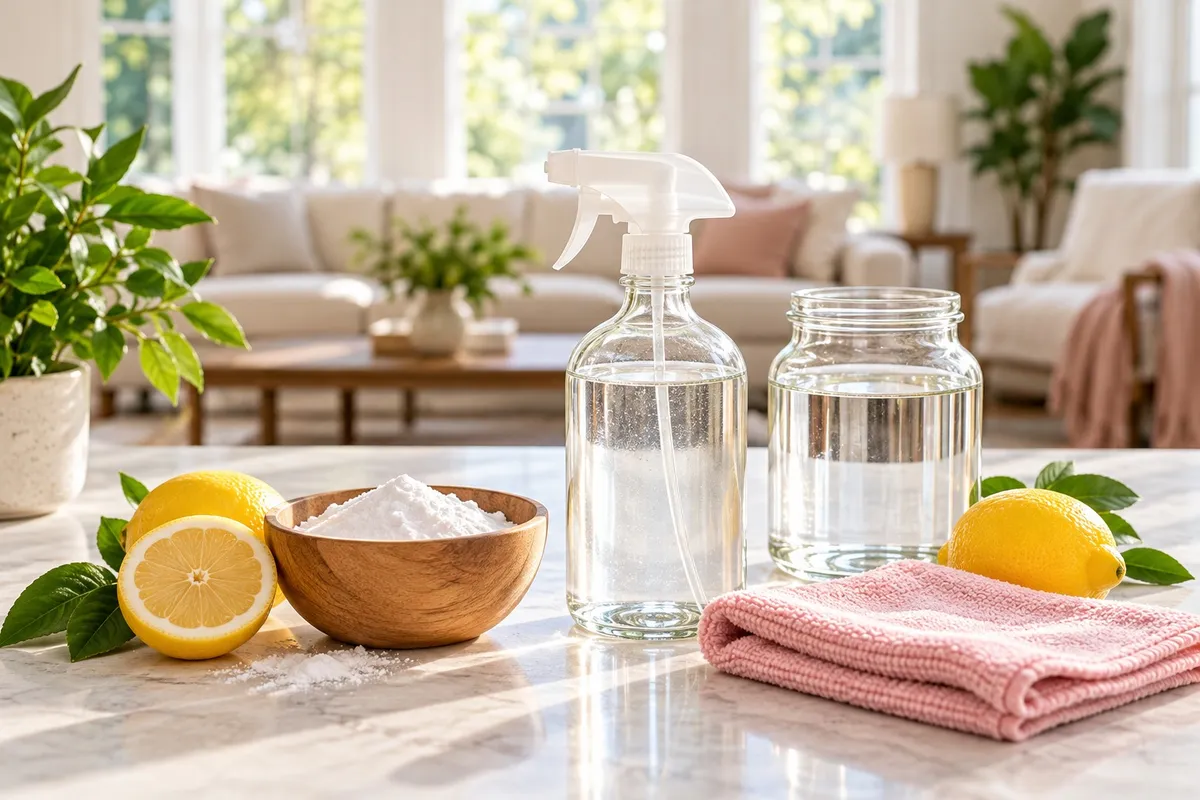
DIY natural cleaners: 6 recipes and where not to use them
DIY natural cleaners start with four things you probably already have: white vinegar, baking soda, dish soap and water. A vinegar spray handles glass and many hard surfaces, soapy water handles wood, stone and painted surfaces, a baking soda paste scrubs without scratching, and plain baking soda freshens carpet and mattresses. Just keep vinegar off stone and never mix anything with bleach.
What do you need to make natural cleaners at home?
- White vinegar
- Baking soda
- A gentle dish soap, or liquid castile soap
- Isopropyl rubbing alcohol
- Cornstarch, for glass
- Olive oil and a lemon, for wood
- Two or three glass or plastic spray bottles, labeled
- A stack of microfiber cloths
Label every bottle with what's in it and the date. A clear spray bottle of "something" under the sink is how mix-ups happen.
Recipe 1: vinegar all-purpose spray
Mix: 1 cup water and 1 cup white vinegar in a spray bottle. A few drops of lemon or lavender essential oil are optional, for the smell; skip the oil if you have pets.
Use it on: glass, mirrors, sealed counters like laminate, ceramic tile, sinks, and the white film hard water leaves on faucets.
Keep it off: marble, granite, travertine and other natural stone, which acid etches. Also unsealed or waxed wood, and electronics screens.
Recipe 2: soapy water for everything else
Mix: a few drops of dish soap or castile soap in a spray bottle of warm water. Too much soap leaves a film, so start small.
Use it on: wood furniture (with a well-wrung cloth), stone counters, painted surfaces, door handles and light switches, and plastic toys.
Recipe 3: streak-free glass cleaner
Mix: 1 cup water, 1 cup white vinegar and 1 tablespoon cornstarch. Shake hard before every use, because the cornstarch settles. Or swap the cornstarch for 1/4 cup of rubbing alcohol, which dries faster and clogs the nozzle less.
Use it on: windows, mirrors, glass tables and picture frame glass.
Wipe with one microfiber cloth and buff dry with a second. Clean glass when the sun isn't shining directly on it, or the spray dries before you wipe and leaves streaks.
Recipe 4: a light wood polish
Mix: 1/4 cup olive oil with 2 tablespoons lemon juice, in a small jar. It doesn't keep, so make a small batch each time.
Use it on: sealed wood furniture that looks dry, after dusting.
Use very little: a few drops on a soft cloth, rubbed in with the grain, then buffed with a dry cloth until it doesn't feel oily. Too much oil leaves a sticky film that collects dust. For weekly dusting, a barely damp microfiber cloth is enough for wood furniture. Test any homemade polish on a hidden spot first, and skip it on antiques and on any finish you're not sure about.
Recipe 5: upholstery spot cleaner
Mix: 1 cup warm water with 1/2 teaspoon dish soap. For tougher spots on synthetic fabric, 1/4 cup rubbing alcohol in a cup of water.
First, check the tag under the cushions. W means water-based cleaners are fine. S means solvent only, so skip both mixes. W/S means either. X means vacuum only, no liquids at all.
Use it: test a hidden spot, then dab the stain with a cloth. Don't scrub or soak. Blot with a dry towel, working from the outside in so the stain doesn't spread, and let it dry fully before anyone sits there.
Recipe 6: baking soda for carpet, mattresses and odors
Carpet and rugs: sprinkle baking soda evenly, leave it at least 30 minutes, or overnight for stronger smells, then vacuum slowly.
Mattresses: strip the bed, vacuum the mattress, sprinkle baking soda, let it sit a few hours with the window open, and vacuum again. Wash the sheets and pillowcases in the warmest water the labels allow while you wait.
Scrubbing paste: baking soda with just enough water to make a paste lifts marks on sinks, tubs and stovetops without scratching. Rinse well.
What should you never mix?
- Never mix bleach with vinegar. It makes chlorine gas.
- Never mix bleach with ammonia, or with any cleaner whose label you haven't read.
- Don't combine vinegar and hydrogen peroxide in one bottle. Use them one after the other if you want, wiping in between.
- Vinegar and castile soap don't mix either. They curdle into a greasy mess. Use one or the other.
- Vinegar and baking soda together is safe, but it doesn't clean better. The fizz is them cancelling each other out. Use them separately.
What to watch with kids and pets
A few cautions:
- Vinegar and alcohol sprays still sting eyes. Keep the bottles up high.
- Some essential oils can be a problem for cats and dogs. If you have pets, leave the oils out or ask your vet first.
- These homemade mixes aren't disinfectants. For raw meat, a stomach bug or a sick household, use a product labeled as a disinfectant and follow its directions.
For crayon, glue and slime, see cleaners for crayon, glue and slime, and for making the whole house smell clean without sprays, natural home freshening tips.
What does a Standard House Cleaning cover?
On a Standard House Cleaning, RoutineCare, the floors are vacuumed and mopped, reachable surfaces and furniture are dusted, counters, shelves and tables that are clear of clutter are wiped, mirrors and glass surfaces are cleaned, and window sills are wiped.
We clean homes across South Jersey and Central Jersey. See what's covered at House Cleaning.
FAQ
What is a good homemade all-purpose cleaner? Mix 1 cup of water with 1 cup of white vinegar in a spray bottle for glass, sealed counters, tile and many hard surfaces. For wood and stone, use warm water with a few drops of dish soap instead, and test a hidden spot first.
Is it safe to mix vinegar and baking soda? It's safe, but it isn't useful. They cancel each other out and leave mostly salty water, so the fizz looks busy without cleaning much. Use the baking soda paste to scrub, rinse, then use vinegar on its own if you need it.
Does vinegar disinfect? Vinegar cleans and cuts mineral film, but it isn't a registered disinfectant. For raw meat spills, illness in the house or anything that needs killing germs, use a disinfectant labeled for that job and follow its directions.
What should you never mix when making your own cleaners? Never mix bleach with vinegar, ammonia or any other cleaner, and don't combine vinegar and hydrogen peroxide in the same bottle. Keep each homemade cleaner in its own labeled bottle.
Book a house cleaning
Book online at tinascleanteam.com/book-now, or call or text (609) 831-4455.
