

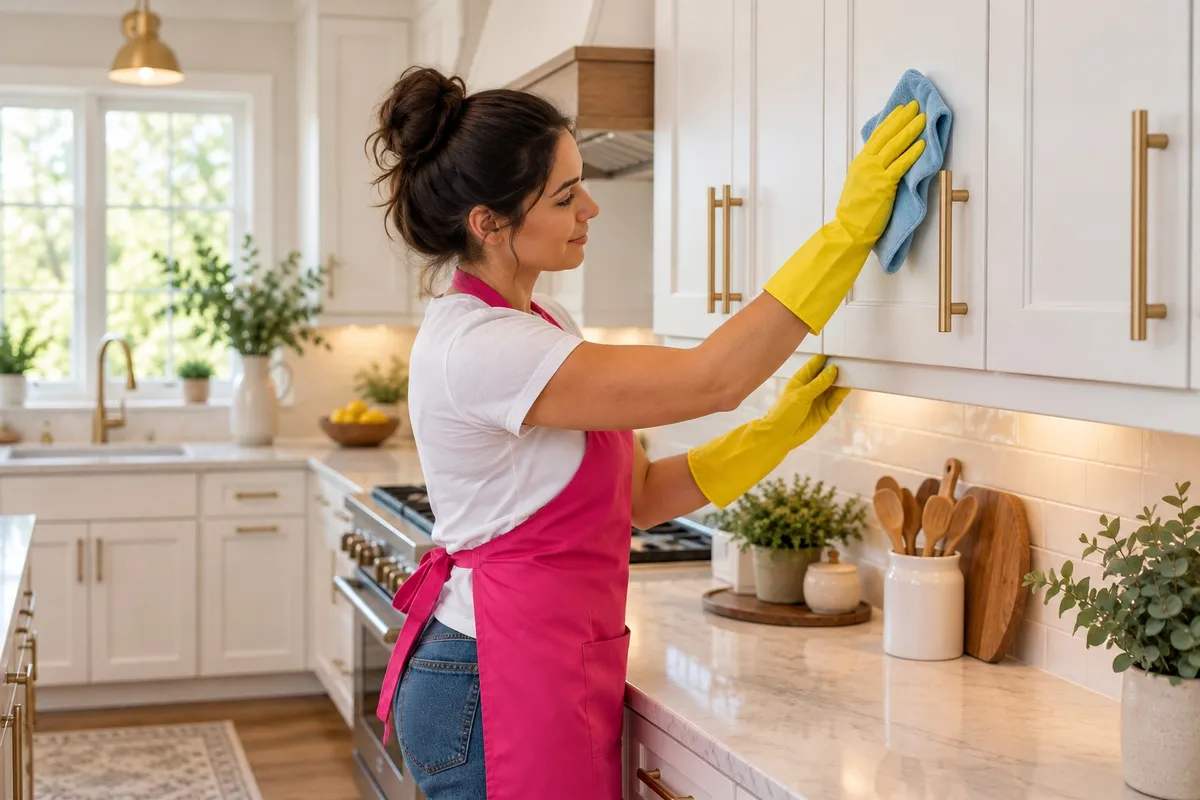
How to clean kitchen cabinets and get the grease off
To clean kitchen cabinets, dust them first, then wipe the fronts with a cloth wrung out in warm water and a few drops of dish soap. Let it sit for a few minutes on greasy spots, wipe again along the grain, rinse with a clean damp cloth and dry right away. Do the handles and edges with an old toothbrush.
The cabinets nearest the stove get a film of cooking grease that grabs dust and turns sticky. The ones by the sink and trash get drips and fingerprints. Everything else mostly needs dusting.
What do you need?
- Two or three microfiber cloths
- A bowl of warm water with a few drops of dish soap
- Baking soda, for heavy grease
- An old toothbrush or a soft detail brush
- A bowl of plain water for rinsing
- A sturdy step stool for the uppers
Leave out abrasive pads, scouring powder and melamine sponges on painted or glossy fronts. They wear through the finish and leave dull patches.
How do you clean kitchen cabinets, step by step?
- Dust first. A dry microfiber cloth along the tops, the door edges and the frames. Wiping wet over dust makes streaks.
- Start at the top. Uppers first, then lowers, so drips land on what you haven't cleaned yet.
- Wipe with soapy water. Wring the cloth until it's damp, not dripping. Wipe each door and drawer front along the grain.
- Let it sit on grease. On sticky spots near the stove, hold the soapy cloth on the area for a minute or two, then wipe. Grease softens instead of smearing.
- Go after the edges and handles. Use the toothbrush around knobs and pulls, in the grooves of shaker panels and along the bottom edge of the doors where drips collect.
- Rinse. A cloth dampened in plain water takes off the soap so it doesn't dry into a film.
- Dry right away. Water left on wood or painted MDF can swell the edges or lift the paint.
A full kitchen takes about 45 minutes to an hour, longer if the grease has built up for a while.
How do you get heavy grease off cabinets?
Make a paste of baking soda and a little water. Rub it on the greasy area with a soft cloth in small circles, let it sit a few minutes, then wipe it off with a damp cloth and dry. Baking soda is mildly abrasive, so test it on the inside of a door first, and go easy on high-gloss and dark paint.
If the film comes back fast, look at the range hood. A hood that isn't running during cooking, or a clogged hood filter, sends grease straight onto the cabinets.
How should you clean each cabinet finish?
- Stained or natural wood: dish soap and water, wrung nearly dry, along the grain. Dry it straight away. Skip vinegar and all-purpose sprays with strong solvents, which can dull the finish over time.
- Painted cabinets: the gentlest touch. Soap and water, no scrubbing pads, and test any new product on a hidden spot.
- Laminate and thermofoil: soap and water, or diluted vinegar for streaks. Keep heat and steam away from thermofoil edges, which can peel.
- High-gloss: a soft microfiber cloth only, and dry with a second cloth to avoid streaks.
- Glass-front doors: glass cleaner on the cloth, not sprayed at the door.
How do you clean inside the cabinets?
Empty one cabinet at a time, so the counters don't disappear. Vacuum out the crumbs with the crevice tool, wipe the shelves with soapy water, rinse and dry. Leave the doors open for a few minutes before putting things back. Toss what's expired while you're there. Washable shelf liner under oils and spices makes the next round much faster.
What about the tops of the cabinets?
If your uppers stop short of the ceiling, the tops collect a sticky mix of dust and grease. Use a degreasing cleaner or the baking soda paste, wipe it off, and dry. Lining the tops with a sheet of paper you can swap out later saves you from doing this again.
How often should you clean them?
Spot-wipe the fronts near the stove, sink and trash weekly. Wipe every front and handle once a month. Empty and wipe the insides a couple of times a year. For the rest of the kitchen on a schedule, see our daily, weekly and monthly kitchen cleaning guide.
When it makes sense to have it done
On Standard House Cleaning, RoutineCare, cabinet and drawer fronts are spot wiped. On Deep Cleaning, PureRenewal, they're fully wiped and the hardware is detailed. On Move-In / Move-Out Cleaning, CleanStart, all the fronts are done, because the home is empty.
Inside the cabinets and drawers is an add-on on all three, and the cabinets must be empty for it.
FAQ
What cleans greasy kitchen cabinets? Warm water with a few drops of dish soap handles kitchen grease, because dish soap is made to cut grease. For a heavy, sticky film, let the soapy cloth sit on it for a few minutes or use a paste of baking soda and water, then rinse and dry.
Can I use vinegar on kitchen cabinets? Diluted vinegar is fine on laminate. On wood and painted cabinets, skip it or use it rarely, because acid can dull the finish over time. Dish soap and water is gentler and works on grease.
How often should kitchen cabinets be cleaned? Spot-wipe the fronts near the stove, sink and trash weekly, wipe all the fronts and handles monthly, and empty and clean the insides a couple of times a year.
Does a house cleaning include kitchen cabinets? Standard House Cleaning spot-wipes cabinet and drawer fronts. Deep Cleaning wipes all the fronts fully and details the hardware. Inside cabinets is an add-on, and the cabinets must be empty.
Book a deep cleaning
We clean homes across South Jersey and Central Jersey. Book online at tinascleanteam.com/book-now, or call or text (609) 831-4455, Monday to Friday, 9 AM to 5 PM.
