

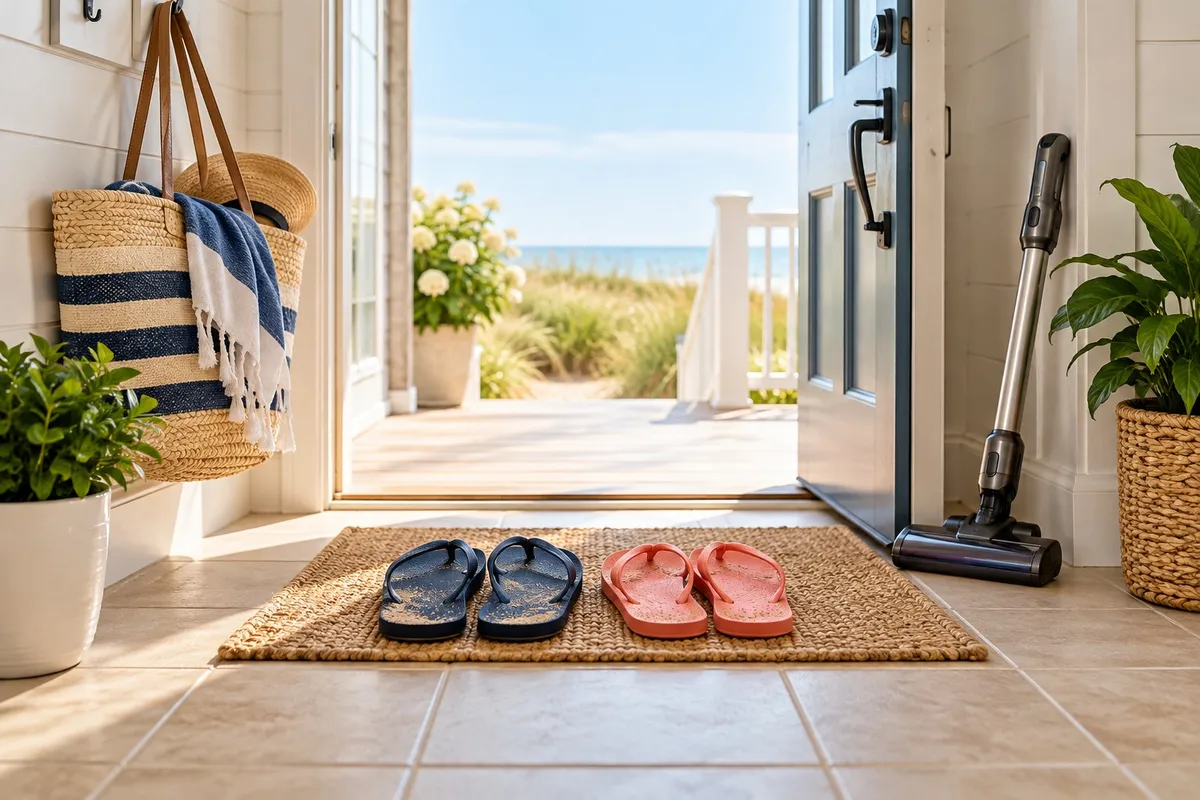
Sandy floors and sticky counters: a summer shore clean-up
To clean sandy floors, get the sand up dry before any water touches the floor: vacuum hard floors with the brush roll off, or sweep first if there's a lot, then damp mop and dry. For sticky countertops, use warm water with a little dish soap, let it sit for a minute, wipe, rinse with plain water and dry. Mats and a rinse at the door cut down what comes in.
Why should you never mop sand?
Sand is tiny bits of rock. A wet mop pushes it across the floor in a gritty paste that scratches hardwood finishes and dulls tile and vinyl. Getting it up dry first is the habit that protects your floors all summer.
How do you clean sand off hard floors step by step?
- Vacuum dry. Use the hard floor setting, with the brush roll off, so it doesn't fling sand around or scratch. Go along the baseboards and into the corners with the crevice tool, because sand drifts to the edges.
- Sweep the heavy spots first if there's a real pile by the door. Sweep it into a dustpan before you vacuum so it doesn't clog the machine.
- Damp mop. Warm water and a small amount of cleaner made for your floor. Wring the mop until it's barely damp, especially on hardwood and laminate.
- Rinse the mop often and change the water when you can see grit in the bucket.
- Dry the floor. Standing water is hard on wood and leaves spots on tile.
On a busy beach weekend, a quick dry vacuum of the entry every evening saves a big cleanup on Sunday night.
How do you get sand out of rugs, carpet and the sofa?
- Small rugs: take them outside, shake them hard or hang them over a railing and beat them, then vacuum both sides.
- Carpet: vacuum slowly, in two directions. The brush needs time to lift sand from deep in the pile, and fast passes leave sand behind.
- The sofa: take the cushions off and use the crevice tool along the seams and the frame. Sand from beach towels ends up there.
- Car seats and floor mats get the same treatment, or the sand comes right back into the house.
How do you clean sticky countertops?
Summer stickiness comes from melted ice pops, juice, sunscreen hands, and spills from cooking for a crowd. Here's how to get the counter clean instead of smeared:
- Clear the counter. You can't clean around things.
- Wipe off crumbs and debris first, so you're not grinding them in.
- Spray warm water with a little dish soap over the sticky areas.
- Wait a minute or two. Sugar dissolves in warm water if you give it time. Scrubbing right away just spreads it.
- Wipe with a microfiber cloth, rinsing it as you go.
- Go over it once more with plain water to take off the soap. Leftover soap or cleaner can leave a counter tacky after you've wiped it.
- Dry it with a clean cloth.
For granite, marble and other natural stone, skip vinegar and lemon. They etch the surface. Use dish soap and water or a cleaner made for stone.
What about salt residue on floors, windows and furniture?
Salt air and wet swimsuits leave a dull, sometimes sticky film.
- Tile and vinyl floors: warm water with a splash of white vinegar, then dry.
- Hardwood and stone floors: plain warm water or a cleaner made for that floor. No vinegar on stone.
- Windows and glass doors: equal parts white vinegar and water, wiped off with a dry microfiber cloth.
- Tables and counters: a damp cloth with a little dish soap, then a dry cloth.
How do you clean beach gear and towels before they come inside?
- Rinse at the door. An outdoor shower, a hose or a bucket of water for feet.
- Shake everything outside. Towels, bags, the cooler, the toys, and turn bags inside out.
- Hose off chairs, toys and the cooler and let them dry outside, so they don't bring in sand or go musty.
- Rinse swimsuits in cold water before they go in the laundry.
- Wash beach towels on their own. Shake them out first so sand doesn't end up in the washer drum.
How do you stop sand coming in at all?
- Two mats: a coarse one outside to knock sand off, an absorbent one inside.
- Shoes off at the door. Flip-flops on a rack or a tray, not kicked into the living room.
- A hook for the beach bag by the door, so it's never set on a couch or a bed.
- A hand vacuum by the door. Ten seconds after everyone comes in beats an hour later.
For the rest of the summer list, see 10 summer cleaning tasks for a fresh home, and for every floor type in the house, how to clean and care for different types of flooring.
What does a house cleaning cover after a summer of sand?
On a Standard House Cleaning, RoutineCare, the floors are vacuumed and mopped, the kitchen countertops and backsplash are cleaned, counters, shelves and tables that are clear of clutter are wiped, and mirrors and glass surfaces are cleaned.
Deep Cleaning, PureRenewal, adds hand-wiped baseboards and the floors under and behind furniture that moves easily, with the edges and corners detailed.
We clean homes across South Jersey and Central Jersey. See what's covered at House Cleaning.
FAQ
What is the easiest way to get sand off the floor? Vacuum it dry with the brush roll turned off on hard floors, or sweep it into a dustpan first if there's a lot. Don't mop until the sand is gone, because a wet mop drags it across the floor like sandpaper.
How do you get sand out of carpet and rugs? Take small rugs outside and shake or beat them, then vacuum both sides. On carpet, vacuum slowly in two directions so the brush loosens sand from deep in the pile.
Why are my countertops still sticky after I wipe them? It may be that the cleaner was too strong or never got rinsed off, or the sticky spill was smeared instead of dissolved. Use warm water with a little dish soap, let it sit a minute, wipe, then go over it with plain water and dry it.
How do you get salt residue off floors and windows? Wipe tile and vinyl with warm water and a splash of white vinegar, then dry. On hardwood and stone, use plain warm water or a cleaner made for that floor, and on glass a vinegar and water mix with a dry microfiber cloth.
Book a house cleaning
Book online at tinascleanteam.com/book-now, or call or text (609) 831-4455.
