

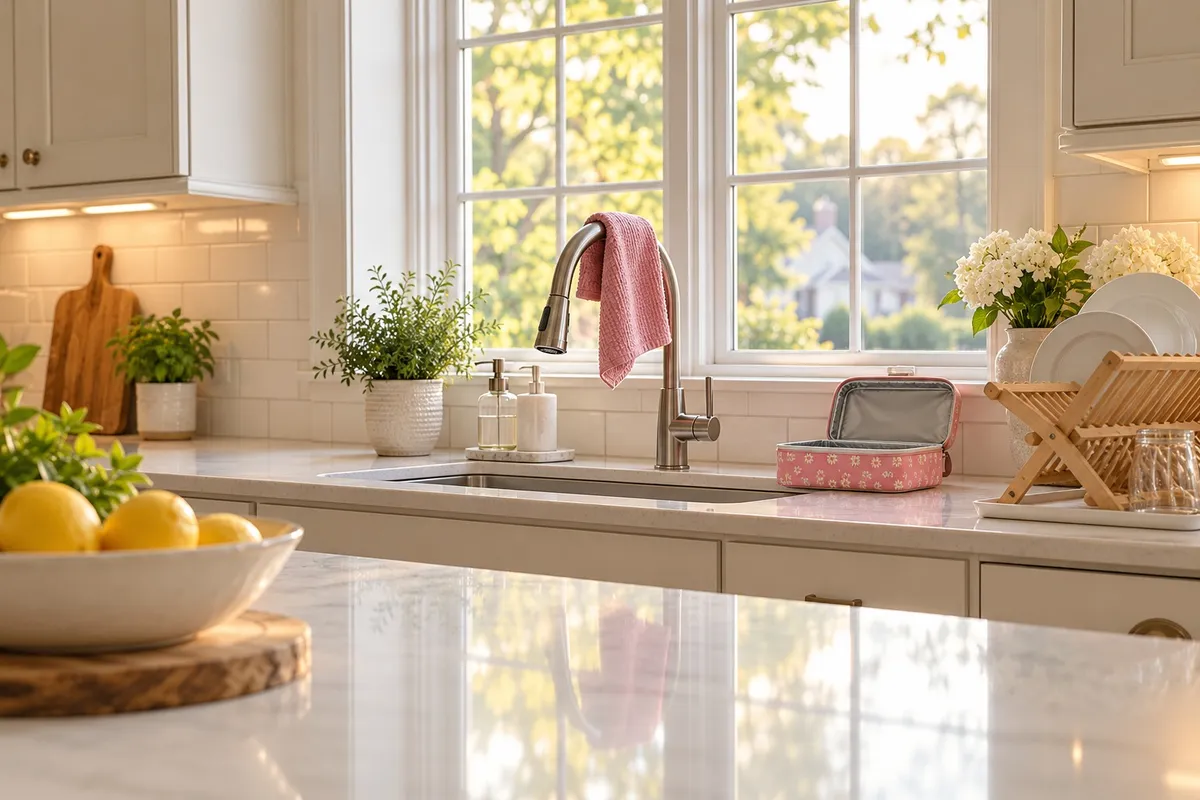
How to maintain a clean kitchen every day
How to maintain a clean kitchen comes down to one habit: a 10 to 20 minute reset every night, in the same order. Dishes done or loaded, counters cleared and wiped, stovetop wiped while it's still warm, sink scrubbed and dried, floor spot-swept. Then one bigger job each weekday, and a deep clean when grease starts to win.
Kitchens don't get dirty in one night. They get dirty in the nights you skip.
What should a nightly kitchen reset include?
Do it in this order, every night, and it stops feeling like a decision.
- Empty the sink first. Load the dishwasher or wash and rack what's left. You need an empty sink to rinse your cloth as you go.
- Clear the counters. Anything that doesn't live on the counter goes back where it belongs: mail, backpacks, chargers, the lunchbox that came home.
- Wipe counters toward the sink. Spray, wipe in one direction, and push crumbs into your hand or the sink. Circles just move crumbs around.
- Wipe the stovetop while it's warm, not hot. Fresh spills lift with a damp cloth. Tomorrow they need a scraper.
- Scrub the sink and dry it. A dry sink is what makes a kitchen look finished. Water left standing is where spots and smells start.
- Spot-sweep and take the trash out if it's full. Under the table and in front of the stove are where the crumbs collect.
For many family kitchens that's 10 to 20 minutes. If it takes longer, something is living on the counter that shouldn't be.
Why do pros clean top to bottom and dry to wet?
Because gravity and water make the rules. Dust and crumbs fall, so you wipe shelves and cabinet tops before counters, and counters before floors. Dry jobs come before wet ones, so you aren't dragging dust through a damp surface and turning it into paste.
Work around the room in one direction, left to right, so nothing gets missed and nothing gets done twice. Try it once and you'll feel the difference.
What kitchen jobs should you do each week?
One job a day keeps the weekend free.
- Monday: microwave. Heat a bowl of water with a few lemon slices for 3 minutes, leave the door shut for a few more, then wipe. The steam does the work.
- Tuesday: fridge purge. The night before grocery day, toss what's expired and wipe the shelf it was sitting on.
- Wednesday: cabinet fronts and handles. Start with the cabinets nearest the stove. Grease floats and settles there first.
- Thursday: backsplash and small appliances. Toaster crumb tray, coffee maker, the outside of the dishwasher and fridge.
- Friday: floors properly. Vacuum or sweep, then mop, edges included.
Swap or wash your sponge every week or two. A sponge that smells is spreading more than it's cleaning. Running it through the dishwasher between swaps helps.
What do you actually need to clean a kitchen?
Less than the cleaning aisle suggests.
- Microfiber cloths in two colors: one for counters and surfaces, one for the sink and floor spills.
- Dish soap and warm water. It cuts a lot of kitchen grease and works on a lot of surfaces.
- An all-purpose spray for counters and appliance exteriors.
- A degreaser for the range hood and the cabinets beside the stove.
- A non-scratch scrub pad and a plastic scraper for cooked-on spills.
- Glass cleaner, or water with a splash of white vinegar, for glass and the microwave door. Not for stone.
How do you deep clean a kitchen after a heavy season?
After a summer of cookouts, or a stretch of holiday hosting, a kitchen collects a layer the nightly reset doesn't touch. Here is where it hides:
- The range hood filter. Pull it out and soak it in the hottest tap water you have with dish soap or a degreaser, then scrub and rinse.
- Cabinet fronts above and beside the stove. A sticky film builds up. Warm soapy water on a microfiber cloth, wiped with the grain, then dried.
- The top of the fridge. Dust and grease mix into a gray film up there.
- The floor by the trash and under the toe kicks. Sticky spots from drips you never saw.
- The garbage disposal. Run cold water, grind a handful of ice, then a few lemon peels.
- Handles and knobs. Fridge, oven, microwave, cabinets. Everyone touches them, nobody wipes them.
Plan a few hours for this, room cleared, music on.
What should you never do when cleaning a kitchen?
- Never mix bleach with vinegar, ammonia or other cleaners. The fumes are dangerous. One product at a time, rinse between.
- Don't use vinegar on granite, marble or other natural stone. Acids etch and dull it. Use a pH-neutral cleaner.
- Don't use steel wool or abrasive powder on stainless steel or a glass cooktop. It scratches. On stainless, wipe with the grain.
- Don't spray straight onto control panels or electronics. Spray the cloth instead.
- Don't let a spill bake on. Ten seconds now saves ten minutes later.
When is it time for a professional deep clean?
When the grease film is on every cabinet, or it's been a long time since anyone cleaned past the counters. That's when Deep Cleaning, PureRenewal, makes sense. On a deep clean, the sink is descaled and polished, the stovetop degreased, the top of the refrigerator wiped where it can be reached, and cabinet and drawer fronts fully wiped with the hardware detailed.
One thing people don't expect: the inside of the refrigerator, the oven and the cabinets are add-ons, not part of the deep clean. Pick them when you book. The fridge needs to be emptied first (the freezer isn't included), and the oven's self-clean cycle should be run before the visit.
Start with one deep clean, then keep it there with your nightly reset and a regular house cleaning. Standard House Cleaning can be booked weekly, every other week or every 4 weeks.
See what's on the list at Deep Cleaning. For more on what to do daily, weekly and monthly, read our kitchen cleaning guide, and for the sink drain, how to clean a kitchen drain and disposal.
FAQ
How do you keep a kitchen clean every day? Do a short reset every night in the same order: dishes, counters, stovetop, sink, then the floor. Add one bigger job each weekday so nothing builds up long enough to need a scrub.
How do you clean greasy kitchen cabinets? Warm water with a few drops of dish soap on a microfiber cloth, wiped with the grain, then a dry cloth behind it. Start with the cabinets nearest the stove, because that is where the grease film is heaviest.
Can I use vinegar on granite or marble counters? No. Vinegar and other acids can dull and etch natural stone. Use a pH-neutral cleaner or warm water with a little dish soap.
Does a deep cleaning include the inside of the fridge and oven? No. On a Tina's deep cleaning, the inside of the refrigerator and the oven are add-ons you pick when you book. The fridge needs to be emptied first (the freezer isn't included), and the oven's self-clean cycle should be run before the visit.
Book a deep clean
Book online at tinascleanteam.com/book-now, or call or text (609) 831-4455, Monday to Friday, 9 AM to 5 PM.
