

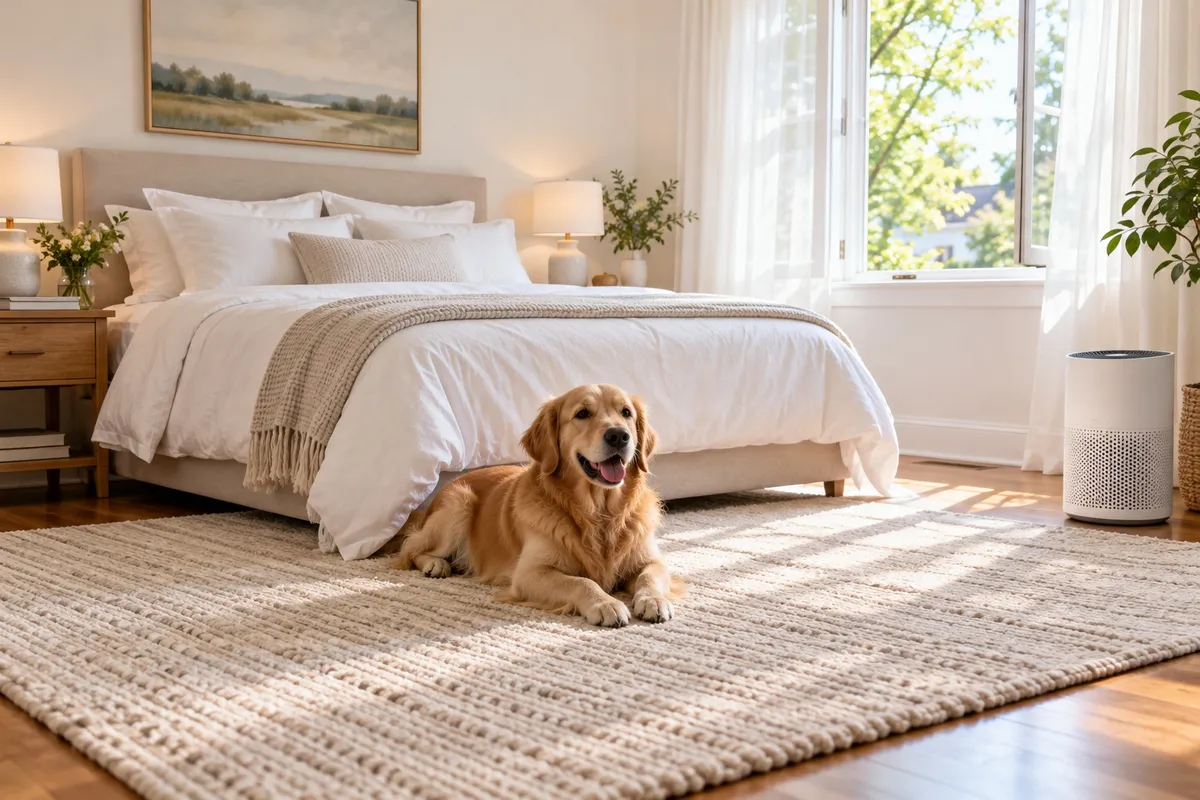
How to reduce dust and allergens at home
To reduce dust and allergens at home, trap dust instead of moving it around: wipe with a damp microfiber cloth, vacuum slowly with a sealed HEPA vacuum, wash bedding weekly in hot water, and keep the HVAC filter fresh. Start with the bedroom, because you spend hours there every night breathing whatever's in the room.
Cleaning won't treat an allergy, and if symptoms are bad, an allergist can tell you what you're actually reacting to. What cleaning can do is cut down how much dust, dander and pollen sits around the house.
What is household dust made of?
Mostly things you can't avoid: shed skin, fabric fibers from clothes, bedding and carpet, pet dander and hair, pollen that comes in on shoes and through windows, and outdoor dirt tracked in. Dust mites live in that mix, mostly in bedding, mattresses, pillows and upholstered furniture, where it's warm and there's plenty for them to feed on.
How do you cut bedroom allergens?
- Wash sheets and pillowcases every week in the hottest water the fabric allows, then dry on high heat.
- Encase the mattress and pillows in zippered allergen-barrier covers. They go on once and get washed every couple of months.
- Wash blankets and duvet covers every two to four weeks, and pillows every few months if the label allows.
- Vacuum the mattress with the upholstery tool when you change the sheets once a month.
- Keep pets off the bed, and out of the bedroom if someone's allergies are bad.
- Cut down the dust collectors. Throw pillows, stuffed animals, piles of books and open shelves of knickknacks all hold dust. Keep fewer of them, or wash and wipe them on a schedule. Stuffed animals that sleep in a kid's bed can go in the wash monthly in a pillowcase.
- Choose washable curtains or blinds you can wipe. Heavy drapes hold dust for years.
- Store off-season clothes in closed bins instead of open shelves.
- Don't make the bed right away. Pull the covers back for an hour to let the sheets dry out.
How do you dust without spreading it?
- Use a damp cloth. A barely damp microfiber cloth picks up dust. A feather duster or a dry rag sends a lot of it into the air.
- Top to bottom. Ceiling fan, light fixtures, top shelves, then furniture, then baseboards, then the floor last. Whatever falls gets picked up on the way down.
- Fold the cloth into quarters and turn to a clean side often. A loaded cloth just smears.
- Don't forget the hidden flat spots: door frames, the tops of picture frames, lampshades, the top of the TV, the headboard and window sills.
What kind of vacuum helps with allergies?
Look for a sealed system with a true HEPA filter. "HEPA-style" or a HEPA filter in a leaky body lets fine dust blow out the exhaust.
- Vacuum slowly, in overlapping passes, and go over rugs in two directions.
- Empty the bin outside or into a bag you can close, and do it before it's full.
- Clean or replace the filter on the schedule in the manual.
- Vacuum upholstered furniture and under the cushions weekly if someone has allergies.
- Hard floors: dust mop or vacuum before you mop. Sweeping with a broom puts a lot back in the air.
What about the air?
- HVAC filter: check it monthly while the heat or AC is running, and replace it when it's gray or the label says it's due. A higher-rated pleated filter catches more fine dust, if your system is rated for it.
- Air purifier: if you use one, put a true HEPA purifier sized for the room in the bedroom. Run it with the door closed.
- Humidity: dust mites and mold like damp air. Run the bathroom fan after showers and a dehumidifier in a damp basement.
- Vents: vacuum the supply and return grilles with the brush attachment every month or two.
How do you handle pets and pollen season?
Pets: brush them outside when you can, wash their bedding weekly, and keep a lint roller or rubber glove by the couch for upholstery. A rubber glove run across fabric pulls hair up into clumps you can pick off.
Pollen season: in South Jersey, spring tree pollen coats cars and porches in April and May. During those weeks:
- Keep windows closed on high-pollen days and use the AC.
- Shoes off at the door, and wipe pets' paws and coats when they come in.
- Change out of outside clothes, and shower before bed so you don't bring pollen into the sheets.
- Dry laundry in the dryer, not on a line.
What cleaning products work for people with allergies?
Fragrance-free and simple. Strong scents from sprays, plug-ins and candles can bother sensitive noses on their own. Warm water with a little dish soap handles a lot of dusting and wiping. Never mix bleach with ammonia, vinegar or other cleaners.
For a full room-by-room bedroom routine, see our bedroom cleaning hacks, and for a kid's room, the kids' bedroom clean-up checklist.
How a regular cleaning keeps dust down
Dust comes back every week, so the schedule matters as much as the method.
On a Standard House Cleaning, RoutineCare, reachable surfaces and furniture are dusted, floors are vacuumed and mopped, mirrors and glass surfaces are cleaned and window sills are wiped.
Deep Cleaning, PureRenewal, adds décor and picture frames, reachable ceiling fans and light fixture exteriors, cobweb removal, dusted blinds, hand-wiped baseboards, and under and behind furniture that moves easily. Every item on the list is cleaned whether or not it looks like it needs it.
With pets in the house, add the Pets add-on: it accounts for extra time and pet hair and removes pet hair and dander. It doesn't include pet waste cleanup.
Recurring House Cleaning, RoutineCare Plans, can be scheduled weekly, every other week or every 4 weeks. In a house with allergies or pets, we'd pick weekly or every other week.
FAQ
Why is my house so dusty even after I clean? Dry dusting and fast vacuuming move dust into the air, and it settles again an hour later. Switch to a damp microfiber cloth, vacuum slowly with a sealed HEPA vacuum, and check the HVAC filter, which may be letting dust recirculate.
How often should I wash bedding for allergies? Wash sheets and pillowcases weekly in the hottest water the fabric allows, and dry them on high heat. Wash blankets and duvet covers every two to four weeks and pillows every few months if the care label allows.
Do air purifiers help with dust? A purifier with a true HEPA filter, sized for the room, can catch some of the fine particles in the air. It doesn't remove the dust already settled on surfaces, so it works alongside regular cleaning.
Can a house cleaning help with pet hair? Yes. The Pets add-on accounts for extra time and pet hair, and removes pet hair and dander. It doesn't include pet waste cleanup.
Book a cleaning
Book online at tinascleanteam.com/book-now, or call or text (609) 831-4455, Monday to Friday, 9 AM to 5 PM.
