

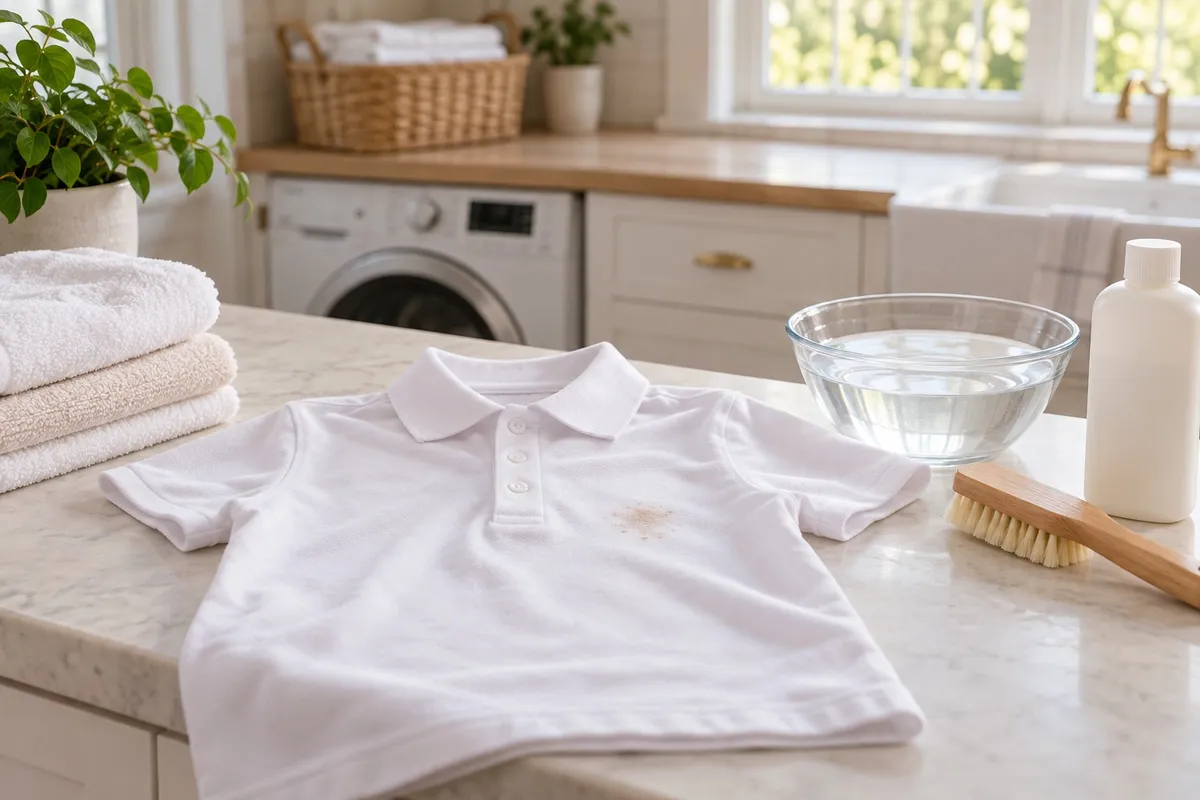
How to remove stains from school uniforms
To remove stains from school uniforms, blot off what you can, rinse the stain from the back of the fabric with cold water, treat it for what it is (detergent for grass and food, dish soap for grease, rubbing alcohol for ink, oxygen bleach for yellowed collars), wash it in the warmest water the label allows, and check the spot before it goes in the dryer. Dryer heat can set a stain for good.
Speed matters. A stain treated the same afternoon is easier to lift than one that sat in the hamper all week.
The 5-step method for uniform stains
- Blot or scrape. Lift off food with a spoon edge. Blot liquids with a paper towel. Don't rub, which pushes the stain deeper into the weave.
- Rinse from the back. Turn the fabric inside out and run cold water through the back of the stain. That pushes it out the way it came in, instead of through the fabric. Hot water first sets protein stains like blood, milk and egg.
- Treat by type. See the list below. Work the treatment in with your fingers or a soft brush and give it 10 to 15 minutes.
- Wash. Use the warmest water the care label allows.
- Check before you dry. Hold the spot up to the light. If you can still see it, treat and wash again. Air dry until it's gone.
How do you treat the common school stains?
Grass. Rub liquid laundry detergent into the stain and let it sit 15 minutes. For stubborn green on white pants, follow with an oxygen bleach soak.
Mud. Let it dry completely, then brush off as much as you can. Wet mud just spreads. Then rinse from the back and treat with detergent.
Ink and marker. Put a folded paper towel under the stain. Dab rubbing alcohol on with a cotton ball and blot, moving to a clean part of the paper towel as the ink transfers. Test on an inside seam first. Washable marker usually comes out with plain detergent.
Ketchup and tomato sauce. Scrape, rinse from the back with cold water, then rub in dish soap. Leftover orange tint on whites often fades with a little sunlight while it air dries.
Grease and pizza. Sprinkle cornstarch or baby powder on the spot to soak up the oil, wait 15 minutes, brush it off, then work in a drop of dish soap and wash.
Chocolate. Scrape, rinse in cold water from the back, then treat with detergent. Chocolate has both fat and protein, so skip hot water until the stain is gone.
Blood from a scraped knee. Cold water only. Soak it in cold salted water, then rub in detergent.
Glue. Soak school glue in warm water to soften it, then wash. For glue stick, scrape off what you can first.
How do you get the ring out of a white polo collar?
The yellow ring is skin oil and sweat, built up a little each wear. Rub liquid detergent or a drop of dish soap into the inside of the collar and the underarms with a soft brush, then soak the shirt in warm water and oxygen bleach for at least an hour. Wash as usual. Doing a quick collar scrub every time the polo goes in the wash keeps the ring from coming back.
What should you skip?
- Chlorine bleach on blends. Many uniform polos are cotton and polyester, and chlorine bleach can yellow polyester and break down stretch fibers. Check the label, and stick with oxygen bleach on whites.
- Mixing cleaners. Never mix bleach with vinegar, ammonia or other cleaners. The fumes are dangerous.
- Drying a stained shirt. Heat can set a stain permanently.
- Hot water first. It sets protein stains like blood, milk and egg.
How do you keep this from becoming a nightly job?
Set up a stain station in the laundry room: a bottle of liquid detergent, dish soap, a soft brush, rubbing alcohol and oxygen bleach, all in one bin. Teach kids to hand off a stained shirt right after school instead of balling it up in the hamper. Older kids can do steps 1 and 2 themselves. Having two or three of each uniform piece buys you time to soak without a morning panic.
For the rest of the after-school routine, see our 10-minute school-day reset routine, and for crayon, glue and slime on household surfaces, cleaners for school-year messes.
Where a house cleaning fits in a school week
On a Standard House Cleaning, RoutineCare, floors are vacuumed and mopped, reachable surfaces and furniture are dusted, and the kitchen counters, sink and stovetop are cleaned.
It can be booked one time, weekly, every other week, every 4 weeks or twice a year. On a schedule, it's Recurring House Cleaning, RoutineCare Plans.
FAQ
How do you get grass stains out of school pants? Rinse the stain from the back with cold water, rub in a little liquid laundry detergent, and let it sit for 15 minutes. Wash in the warmest water the label allows, and air dry until the green is gone.
How do you get the yellow ring out of a white polo collar? Rub liquid detergent or a little dish soap into the collar with a soft brush, then soak the shirt in oxygen bleach and warm water for an hour or more before washing. Treating the collar every wash keeps the ring from building up again.
Can you get a stain out after it's been through the dryer? Sometimes. Treat it the same way and soak it longer, overnight for oxygen bleach on whites. Heat sets stains, so the odds are better if you catch it before drying.
Should I use chlorine bleach on white school shirts? Check the label first. Many uniform polos are a cotton and polyester blend, and chlorine bleach can yellow polyester and weaken stretch fabric. Oxygen bleach is the gentler choice for whites.
Book a house cleaning
We clean homes across South Jersey and Central Jersey. Book online at tinascleanteam.com/book-now, or call or text (609) 831-4455, Monday to Friday, 9 AM to 5 PM.
