

How to remove tough stains and grime when you move out
To remove tough stains when moving out, match the cleaner to the grime. Grease needs dish soap or a degreaser. Soap scum and hard water need an acid like white vinegar. Baked-on food needs a baking soda paste and time. Wall scuffs need a melamine sponge and a light hand. Let each product sit before you scrub, and test on a hidden spot first.
Why doesn't one cleaner work on everything?
Grime comes in two kinds. Grease, food and body oils are acidic, so they break down with alkaline cleaners: dish soap, degreasers and baking soda. Soap scum, hard water spots and limescale are mineral, so they dissolve with acids: white vinegar or a descaler.
Use the wrong one and you can scrub for an hour with little to show for it. Use the right one and give it ten minutes to work, and the scrubbing gets much easier.
Never mix cleaners. Bleach with ammonia or with vinegar makes toxic gas. Hydrogen peroxide and vinegar shouldn't go in the same bottle either. Use one, rinse, then use the next. Open a window and wear gloves.
How do you get grease off a stovetop, hood and cabinets?
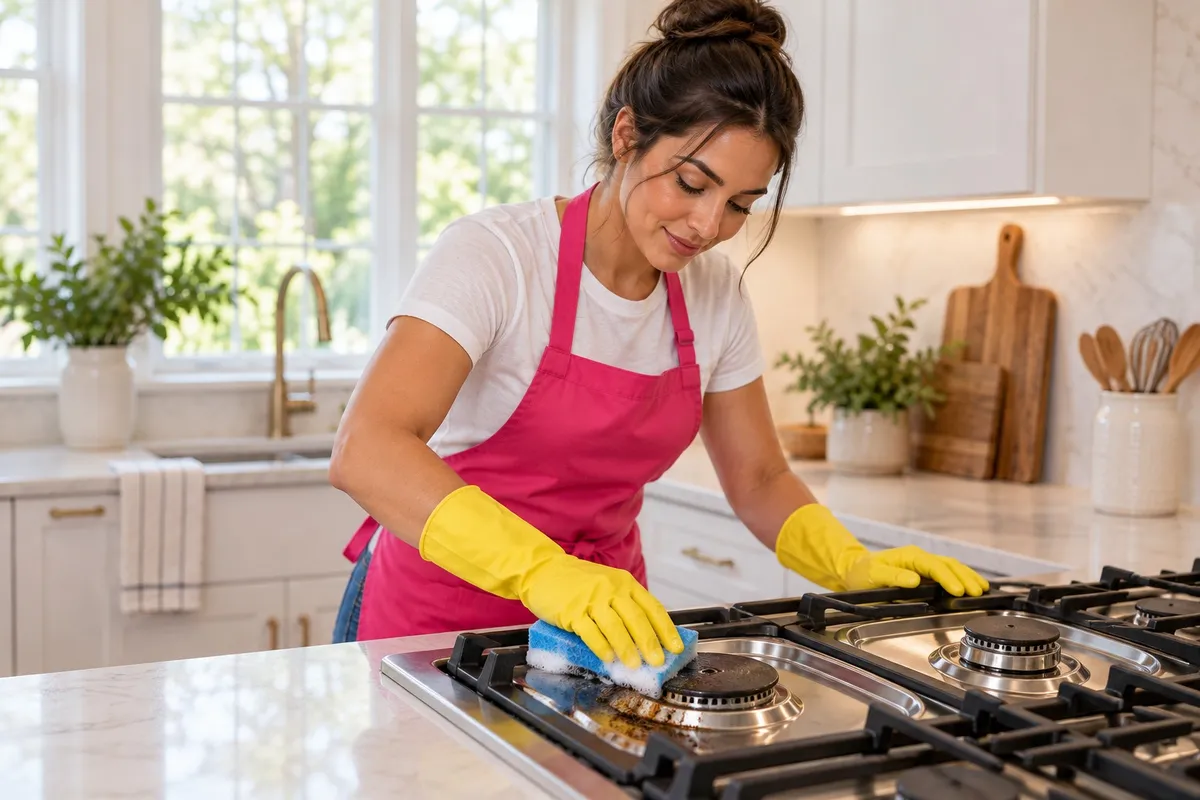
- Stovetop: soak the grates or drip pans in the sink in very hot water with dish soap for 30 minutes. For the stovetop itself, spread a paste of baking soda and a little dish soap on the baked-on spots, wait 15 minutes, and scrub with a non-scratch pad.
- Range hood: soak the filter in very hot water with dish soap and a handful of baking soda. Wipe the hood underside with a degreaser, which is where the grease sits.
- Cabinet fronts near the stove: warm water with a good squirt of dish soap on a soft cloth, left for a minute to soften the film, then wiped. Use a degreaser on what's left. Test on a hidden spot, especially on painted or wood cabinets. Dry them as you go.
- Backsplash and grout behind the stove: degreaser, then an old toothbrush on the grout lines.
Our guide to cleaning a stovetop covers gas, coil and glass tops in detail.
How do you clean a baked-on oven?
If it has self-clean, run it with the racks out (unless the manual says otherwise) and a window open, then wipe out the ash once it's cool. If not, spread a thick baking soda paste over the inside, avoiding the heating elements, and leave it overnight. Scrape it off with a plastic scraper, spritz the leftover film with vinegar, and wipe until it's clear.
How do you remove soap scum and hard water stains?
- Tub and shower walls: warm white vinegar in a spray bottle, with a few drops of dish soap so it clings. Spray, leave 15 to 30 minutes, scrub with a non-scratch pad, rinse.
- Shower door glass: the same spray, then a squeegee. Heavy buildup may need a second round.
- Faucets and fixtures: wrap the spout in a vinegar-soaked paper towel for half an hour, then scrub around the base with a toothbrush.
- Toilet ring: drain the bowl by turning off the water and flushing, then use a wet pumice stone gently on white porcelain only. Keep it wet, or it scratches.
- Natural stone: vinegar etches marble, travertine and limestone. Use a pH-neutral stone cleaner instead.
What about grout and mildew?
For grubby grout, a paste of baking soda and water scrubbed in with a stiff brush lifts surface dirt. Oxygen bleach mixed per the label works on stubborn grout, with 10 to 15 minutes of dwell time.
Surface mildew on tile and caulk comes off with a mildew remover used the way its label says, with the fan on. If the black is inside the caulk, it won't scrub out. The fix is new caulk, and that's worth telling your landlord about rather than scrubbing at.
See our guide to cleaning tile grout for more methods.
How do you get scuffs and marks off walls?
- Scuffs and pencil: a melamine sponge, barely damp, with light pressure. Test it first, because it can leave a shiny or dull patch on flat paint.
- Crayon: a little dish soap on a damp cloth, or a hair dryer on low to soften the wax, then wipe.
- Greasy fingerprints by switches: a drop of dish soap in warm water on a microfiber cloth. Wipe, then dry.
- Sticker and tape residue: a little cooking oil on a cloth to loosen it, then soapy water to remove the oil.
Work from the bottom of the wall up when you're using anything wet, so drips land on clean wall and don't streak.
How do you treat carpet stains before moving out?
Blot, never scrub. Mist the stain with plain water and blot again. For what's left, use a teaspoon of clear dish soap in two cups of warm water, then rinse with plain water and blot until the cloth comes up clean. On light-colored synthetic carpet, a little hydrogen peroxide can lift old stains, but test it first, since it can bleach.
If the carpet needs more than spot cleaning, book a carpet cleaning company while the rooms are empty and leave a full day for it to dry.
When do you stop scrubbing?
When a stain hasn't moved after two honest tries with the right product. Past that, you're more likely to wear away paint, dull a finish or scratch a tub than to lift the stain. Etching on stone, burns, bleach spots and mildew inside caulk are damage that cleaning won't undo. Photograph them and talk to your landlord or agent.
What does a move-out cleaning service handle?
On Move-In / Move-Out Cleaning, CleanStart, every item on its checklist is included every time: throughout the home, the kitchen, the bathrooms and the laundry area.
In the kitchen that includes the countertops and backsplash, the sink, the stovetop, range exterior and hood exterior, and all the cabinet fronts. In the bathrooms, the toilet inside, outside and base, the tub, shower and tiled walls, shower door glass and tracks, fixtures and drains, the sink, vanity and mirrors.
Not offered on a move-in or move-out clean: paint stains, mold and other biohazards, and exterior windows. Washing walls and carpet shampooing or steam cleaning aren't on any of our cleaning checklists. Working water, electricity and lighting are required.
Submitting the form sends a booking request. The appointment is confirmed after the details are reviewed and an available cleaning professional is matched, so book as soon as you know your move-out date.
See the full checklist at Move-In and Move-Out Cleaning.
FAQ
What removes years of grease from kitchen cabinets? Warm water with a good squirt of dish soap, applied with a soft cloth and left for a minute, then a degreaser for what's left. Work in small sections, rinse with a damp cloth and dry, and test on a hidden spot first if the cabinets are painted or wood.
How do you get hard water stains off a shower door? Spray it with warm white vinegar, or a vinegar and dish soap mix, and leave it for 15 to 30 minutes. Scrub with a non-scratch pad, rinse and squeegee it dry.
Can I use a melamine sponge on painted walls? Carefully. It works by gently sanding the surface, so on flat or matte paint it can leave a shiny or dull patch. Test it on a hidden spot, use light pressure and stop as soon as the mark is gone.
What stains can't be fixed with cleaning? Etching on stone counters, burns in carpet or laminate, bleach spots on carpet, and mildew that has grown inside caulk or grout are damage. More scrubbing won't fix them, so photograph them and talk to your landlord or agent.
Book a move-out cleaning
Book online at tinascleanteam.com/book-now, or call or text (609) 831-4455, Monday to Friday, 9 AM to 5 PM.
