

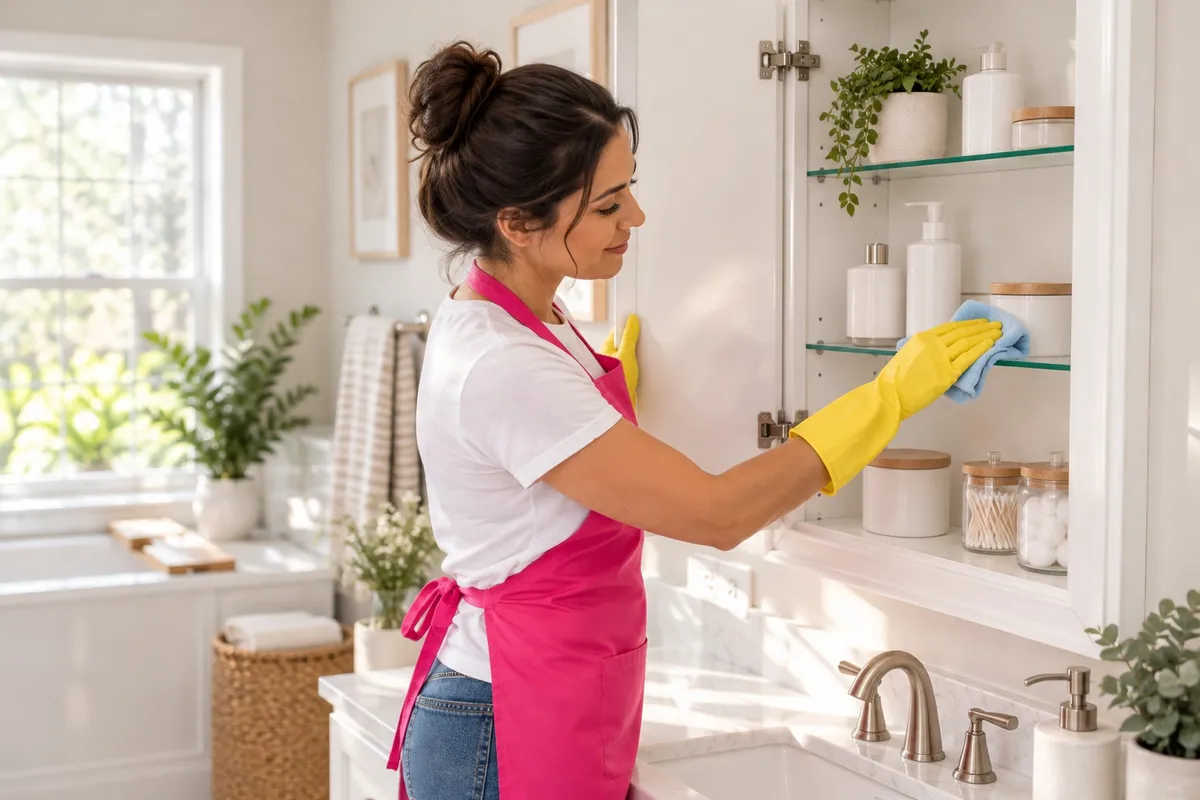
How to clean a medicine cabinet, inside and out
To clean a medicine cabinet, take everything out, throw away what's expired, wash the shelves and the inside walls with warm soapy water, lift rust rings with a baking soda paste, dry everything, and clean the mirror door last with a cloth sprayed with glass cleaner rather than the glass itself. It takes about 20 to 30 minutes.
The emptying out is the slow part. The cleaning goes fast once the shelves are bare.
What do you need?
- A towel or a tray to set things on
- A small bowl of warm water with a few drops of dish soap
- Baking soda
- Rubbing alcohol and cotton pads
- White vinegar, for stubborn marks on glass
- Glass cleaner, or a mix of vinegar and water
- Two or three microfiber cloths
- An old toothbrush or a cotton swab for corners and hinges
How do you clean a medicine cabinet, step by step?
- Empty it. Lay a towel on the counter and take everything out. Close the sink drain first so nothing small goes down it.
- Sort as you go. Expired medicine, old sunscreen, dried-out mascara, the cough syrup from three winters ago: set it aside to toss. Wipe sticky bottles before they go back.
- Take out glass shelves if they lift out. Wash them in the sink with warm soapy water, rinse and dry. Handle them by the edges. They're thin and they break when they hit a faucet.
- Wash the inside. Wipe the walls, the floor of the cabinet and the shelf clips with a soapy cloth, top to bottom. The toothbrush gets the corners and the shelf-peg holes.
- Deal with rust rings and residue.
- Dry everything. A damp cabinet is where new rust rings start.
- Clean the mirror door. Spray the cloth, not the mirror, and wipe in an S pattern from top to bottom. Liquid that runs into the mirror's edges can damage the silver backing over time and leave black marks around the edge.
- Wipe the hinges and the frame. Dust and hairspray build up on the hinges and the top edge of the door.
- Put things back with the daily items at eye level and anything you don't want small kids reaching on the top shelf.
How do you get rid of rust rings and sticky spots?
Rust rings come from the bottom of metal cans, like shaving cream and hairspray. Rub a paste of baking soda and water on the ring with a damp cloth. On glass or enamel, if a mark stays, lay a cloth soaked in white vinegar on it for a few minutes and wipe again. On painted metal shelves, go gently. If the paint is already gone under the ring, cleaning won't bring it back.
To stop new rings, set cans on a small plastic lid or a silicone mat.
Sticky spots from syrup, lotion and leaked bottles: a warm soapy cloth first. Whatever's left comes off with a little rubbing alcohol on a cotton pad.
Old label or tape residue: rubbing alcohol, or a drop of cooking oil worked in with your finger and then washed off with soapy water.
How do you clean each kind of cabinet?
- Painted wood or MDF: a damp, soapy cloth, never soaked. Water that gets into an edge or a chip makes MDF swell. Dry it right away.
- Metal: soap and water, then dry. Skip abrasive pads, which scratch through the paint and start rust.
- Plastic: soap and water. A baking soda paste for scuffs.
- Glass shelves and mirror: glass cleaner on a cloth, or a mix of vinegar and water.
Should medicine even go in the medicine cabinet?
Medicine labels often say to store it in a cool, dry place. A bathroom with a daily hot shower is neither. If your bathroom gets steamy, keep medicine in a kitchen cabinet or a bedroom drawer and use the medicine cabinet for toothpaste, skin care and the things that don't mind the humidity.
If you have small kids, keep medicine and anything sharp somewhere locked or up high, and don't count on a medicine cabinet as either.
Running the exhaust fan during every shower also helps the cabinet: less steam means fewer rust rings and less of that musty smell inside.
How do you get rid of expired medicine?
Drop it in a drug take-back box at a pharmacy or police station, or a community take-back day. If there isn't one near you, follow the disposal directions on the label, or ask your pharmacist.
What does a house cleaning cover?
On a Standard House Cleaning, RoutineCare, the bathroom mirrors, the sink, counter and faucet, and the vanity and cabinet fronts are cleaned on every visit.
See what's covered at House Cleaning. For the rest of the bathroom, see how to clean bathroom tiles and our bathroom cleaning tips.
FAQ
What should I use to clean the inside of a medicine cabinet? Warm water with a few drops of dish soap handles almost everything, on a microfiber cloth. Add a baking soda paste for rust rings and a little rubbing alcohol for sticky spots, then dry every surface before anything goes back in.
How do you get rust rings off medicine cabinet shelves? Rub a paste of baking soda and water on the ring with a damp cloth. If a mark stays on glass or enamel, a little white vinegar on a cloth for a few minutes loosens it. On painted metal, go gently so you don't lift the paint.
How often should a medicine cabinet be cleaned? Wipe the mirror door and the shelf edges whenever you clean the bathroom. Empty it out and clean the inside twice a year, which is also a good time to check expiration dates.
What do I do with expired medicine? Take it to a pharmacy or police station drug take-back box, or a community take-back day. If there's none near you, follow the disposal directions on the label or ask your pharmacist.
Does a house cleaning include the medicine cabinet? The mirror, the vanity and the cabinet fronts are cleaned on every Standard House Cleaning.
Book a house cleaning
Book online at tinascleanteam.com/book-now, or call or text (609) 831-4455, Monday to Friday, 9 AM to 5 PM.
