
How to clean and disinfect high-touch surfaces
To disinfect high-touch surfaces, clean them first with soap and water or an all-purpose cleaner, then apply a registered disinfectant and leave it wet for the full contact time on the label before it dries. Do door handles, light switches, remotes, cabinet pulls and railings. Weekly is enough for much of the year. When someone is sick, do them daily.
Which surfaces count as high-touch?
The things hands touch on the way in, on the way out and every time someone sits down. In a living room and the rooms around it, that's usually:
- Door handles and knobs, inside and out, including the front door
- Light switches and switch plates
- TV remotes, game controllers and tablets
- Arms of the couch and recliner handles
- Coffee table and end table edges
- Stair railings and banisters
- Cabinet and drawer pulls on the TV stand or console
- Thermostat, smart speaker and the lamp switch everyone feels around for
Walk the room once with a list and you'll find a few that are particular to your house. In homes with kids, add the toy bin lid and whatever they grab to pull themselves up.
What is the difference between cleaning and disinfecting?
Cleaning removes dirt and grease. Disinfecting kills germs that are left on a clean surface.
Order matters. Disinfectant sprayed over fingerprints and grime has to work through that layer first. Clean, then disinfect.
For everyday weeks, cleaning alone is plenty. Save disinfecting for cold and flu season, a stomach bug in the house, or after a crowd has been through.
How do you disinfect high-touch surfaces step by step?
You need an all-purpose cleaner or warm soapy water, a disinfectant registered for household use, a stack of clean microfiber cloths and gloves.
- Read the label first. Find the contact time, the number of minutes the surface has to stay wet.
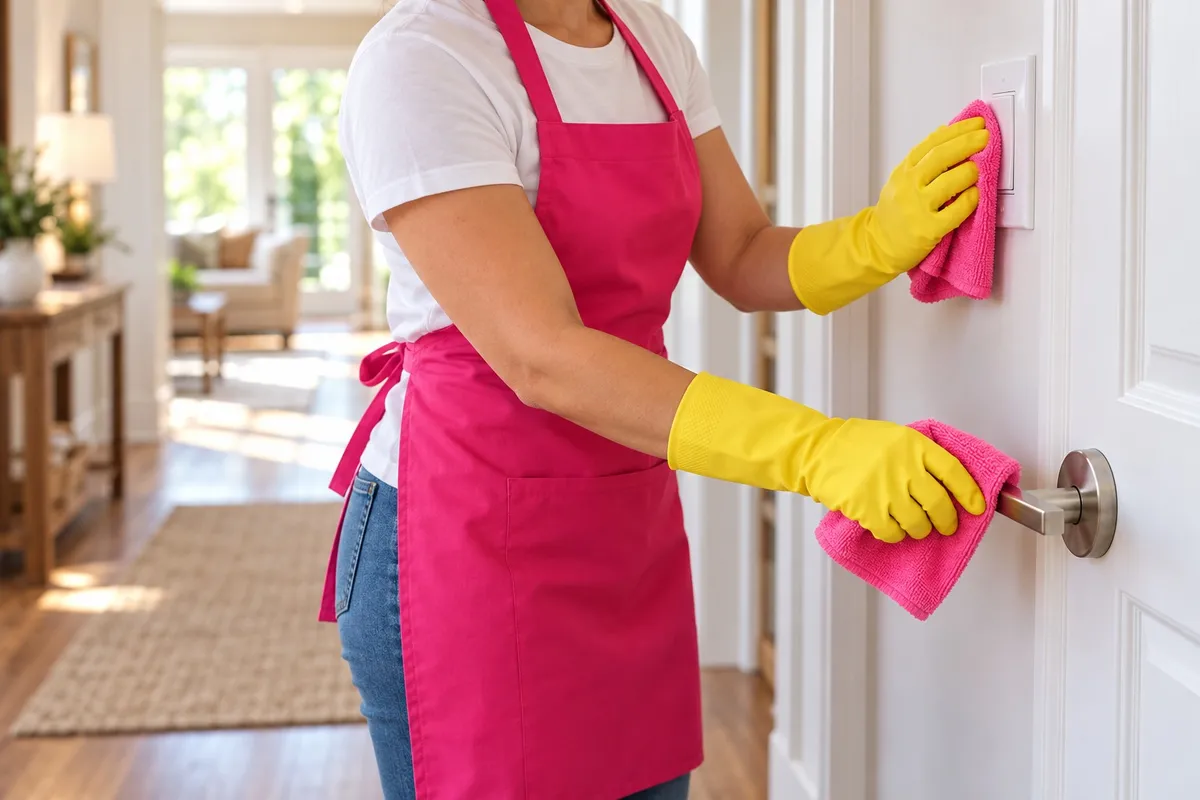
- Clean. Wipe each surface with the cleaner and a cloth. Get into the grooves of door levers and the edges of switch plates.
- Apply the disinfectant. Spray it on the cloth for anything electrical, and directly on hard surfaces like railings and handles.
- Leave it wet. Don't wipe it off early. If it starts to dry before the time is up, apply a little more.
- Rinse where needed. Some labels ask you to rinse surfaces that touch food or that kids put in their mouths. Follow it.
- Use fresh cloths. Fold the cloth into quarters and turn to a clean side often. One cloth dragged around the whole house spreads germs.
- Wash your hands after you take the gloves off.
A full pass of a living room, entry and stair railing takes about 15 to 20 minutes.
How do you clean electronics without damaging them?
Power them down or take the batteries out. Use an alcohol-based wipe squeezed nearly dry, or put a little disinfectant on a cloth, never on the device. A cotton swab gets between remote buttons. For a TV screen, use only a dry microfiber cloth or the cleaner the manufacturer names.
What mistakes should you avoid?
- Mixing products. Bleach with ammonia or with vinegar makes toxic fumes. Use one product at a time and rinse between them.
- Wiping disinfectant dry right away. That turns it into an expensive cleaner.
- Using disinfectant on everything. Leather, unsealed wood and natural stone can be damaged by it. Clean those with the gentle product made for them.
- Spraying switch plates. Liquid can run behind the plate. Spray the cloth.
- Forgetting ventilation. Open a window or run a fan while you work.
How often should you do it?
Day to day, wipe the high-touch list once a week as part of your regular cleaning. When someone in the house is sick, disinfect the things they touch once a day until everyone is better, and add the bathroom faucet handles and the fridge door. After a big get-together, one pass the next time you clean is enough.
Winter in New Jersey means school colds and closed windows. That's the season to tighten up.
Does a house cleaning include high-touch surfaces?
With Standard House Cleaning, RoutineCare, light switches, door knobs and handles are on request. Tell us before your appointment and we'll do our best to fit them in if time allows.
Deep Cleaning, PureRenewal, includes them, along with doors and door frames and stair railings and banisters. Every item on the list is cleaned whether or not it looks like it needs it.
For the rest of the room, see how to dust your home and our living room deep cleaning guide.
FAQ
What is the difference between cleaning and disinfecting? Cleaning removes dirt and grease with soap or detergent and a cloth. Disinfecting uses a registered product to kill germs on a surface that has already been cleaned. Disinfectant on a dirty surface does a poor job.
How long should disinfectant stay on a surface? As long as the label says. The surface has to stay visibly wet for that time. Wiping it dry early means it cleaned but did not disinfect.
How often should I disinfect door handles and light switches? A weekly clean is plenty for much of the year. When someone in the house is sick, disinfect the handles, switches, remotes and faucet handles they touch once a day until everyone is well.
How do I disinfect a TV remote without ruining it? Take the batteries out, wipe it with an alcohol-based wipe squeezed nearly dry, and use a cotton swab between the buttons. Never spray anything directly onto a remote or a screen.
Book a cleaning
We clean homes across South Jersey and Central Jersey. Book online at tinascleanteam.com/book-now, or call or text (609) 831-4455.
