

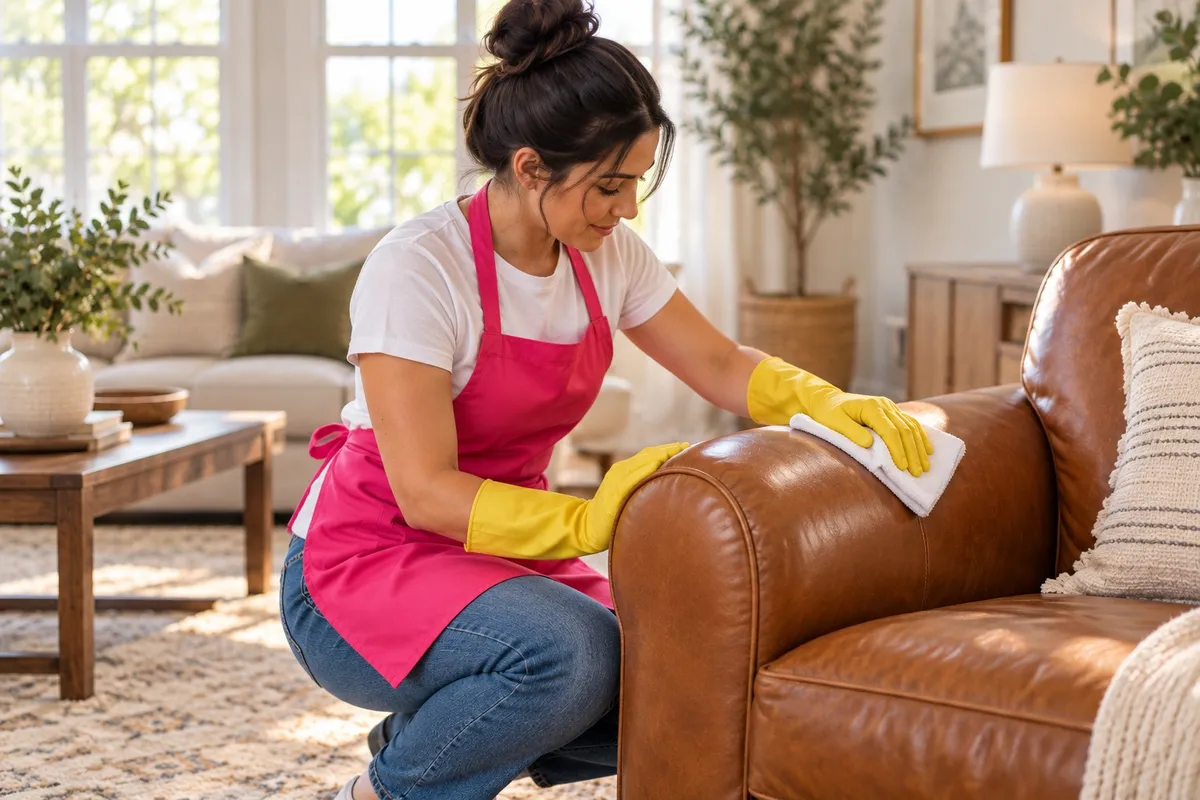
How to keep leather furniture looking new
To keep leather furniture looking new, dust it every week, wipe it with a soft cloth that is barely damp, clean spots with a pH-balanced leather cleaner, and condition it two to four times a year. Keep it a couple of feet from heat vents and out of direct afternoon sun.
What kind of leather do you have?
Check before you put anything on it. Many leather couches and chairs are finished (also called protected or pigmented) leather. They have a coating on top, so liquid sits on the surface for a moment before soaking in.
Aniline and semi-aniline leather has little or no coating. It feels softer, shows natural grain and marks, and darkens the moment water touches it.
The quick test: put one drop of water somewhere hidden, like the back of a cushion. If it beads, the leather is finished and everything below applies. If it soaks in and darkens, treat it as aniline: dry cloth only, blot spills, and call a leather specialist for anything beyond that.
The furniture tag or the maker's care sheet will often tell you outright.
How do you clean a leather couch?
You need a vacuum with a soft brush attachment, two or three soft microfiber cloths, distilled water if your tap water is hard, and a pH-balanced leather cleaner for spots.
- Vacuum first. Use the soft brush on the seams, the tufting and the gap between the cushions and the frame. Crumbs and grit work like sandpaper every time someone sits down.
- Wipe the whole piece. Dampen a cloth, wring it until it's nearly dry, and wipe from the top of the back down to the base. Leather should never feel wet after this step.
- Spot clean. Put a little leather cleaner on a cloth, not on the leather, and work it over the spot in small circles. Test it on a hidden area first.
- Dry it. Go over everything with a dry cloth so no moisture sits in the grain.
- Condition, if it's due. A small amount of conditioner on a clean cloth, worked in with light circles, then buffed with another dry cloth after it soaks in. Less is more. Too much leaves the surface greasy and attracts dust.
A three-seat sofa takes about 20 minutes for a regular clean and about 40 with conditioning.
What should you keep off leather?
- Vinegar, ammonia, bleach and all-purpose sprays. They dry the leather and can lift the color.
- Baby wipes and disinfecting wipes. They leave residue and strip the finish over time.
- Olive oil or other cooking oils. They go rancid, darken the leather and stay sticky.
- Saddle soap on furniture. It's made for heavy boot and tack leather and is too harsh.
- A hair dryer on a wet spot. Fast heat shrinks and stiffens the leather. Let it air dry.
- Soaking it. If water drips, you used too much.
How do you handle common leather stains?
Spills: Blot, don't rub, with a dry cloth as soon as it happens. Rubbing pushes liquid deeper.
Grease and body oil: The dark patch where heads and arms rest. Wipe the area with leather cleaner and dry it well. For a fresh grease spot on finished leather, a light sprinkle of cornstarch left for a few hours can pull some of it out before you brush it off.
Ink: Leave this one alone unless the cleaner's label says it handles ink. Rubbing alcohol and hairspray tricks remove the color along with the ink. A leather repair shop has the right tools.
Water marks: Dampen the whole panel evenly from seam to seam, then let it dry slowly. Blending the panel usually fades the ring.
How do you keep leather from cracking and fading?
Keep leather a couple of feet from radiators and heat vents, and close the blinds on the sunny side of the room in the afternoon. Window film is worth it if a couch has to sit in front of a big window.
New Jersey winters make this matter more. Once the heat is on, indoor air gets dry, and leather near a forced-air vent can dry out quickly. Check it in January and condition it if it looks dull or feels stiff.
A few more habits help:
- Rotate and flip cushions every few weeks so wear spreads evenly.
- Keep pens, jeans with fresh dye and newspapers off light-colored leather. Dye and ink transfer.
- Trim pet nails, and throw a blanket over the favorite spot if the dog or cat gets on the couch.
Does a house cleaning include leather furniture?
Standard House Cleaning, RoutineCare, dusts reachable surfaces and furniture and vacuums the floors around them.
Deep Cleaning, PureRenewal, adds the detail work: décor and picture frames dusted, edges and corners of the floor detailed, and under and behind furniture that moves easily. Every item on the list is cleaned whether or not it looks like it needs it.
For fabric pieces, see our guide to cleaning living room upholstery. For the rest of the room, start with how to dust your home.
FAQ
How often should I condition a leather couch? Two to four times a year suits many finished leather pieces in a normal living room. Condition more often if the couch sits near a heat vent or a sunny window, and less if it looks greasy after you apply it.
Can I use baby wipes or disinfecting wipes on leather? Skip them. Many contain alcohol, fragrance or cleaning agents that strip the finish over time and leave dull, sticky patches. A cloth with a little water does the daily work better.
How do I get a water stain out of leather? Dampen the whole panel evenly from seam to seam with a barely wet cloth, then let it dry slowly away from heat. Spot-wetting only the stain tends to leave a ring, and blending the whole panel usually fades it.
What about aniline or unfinished leather? Aniline leather has no protective coat, so water and cleaners soak straight in. Dust it with a dry cloth, blot spills right away, and leave anything more to a leather specialist.
Book a cleaning
We clean homes across South Jersey and Central Jersey. Book online at tinascleanteam.com/book-now, or call or text (609) 831-4455.
