

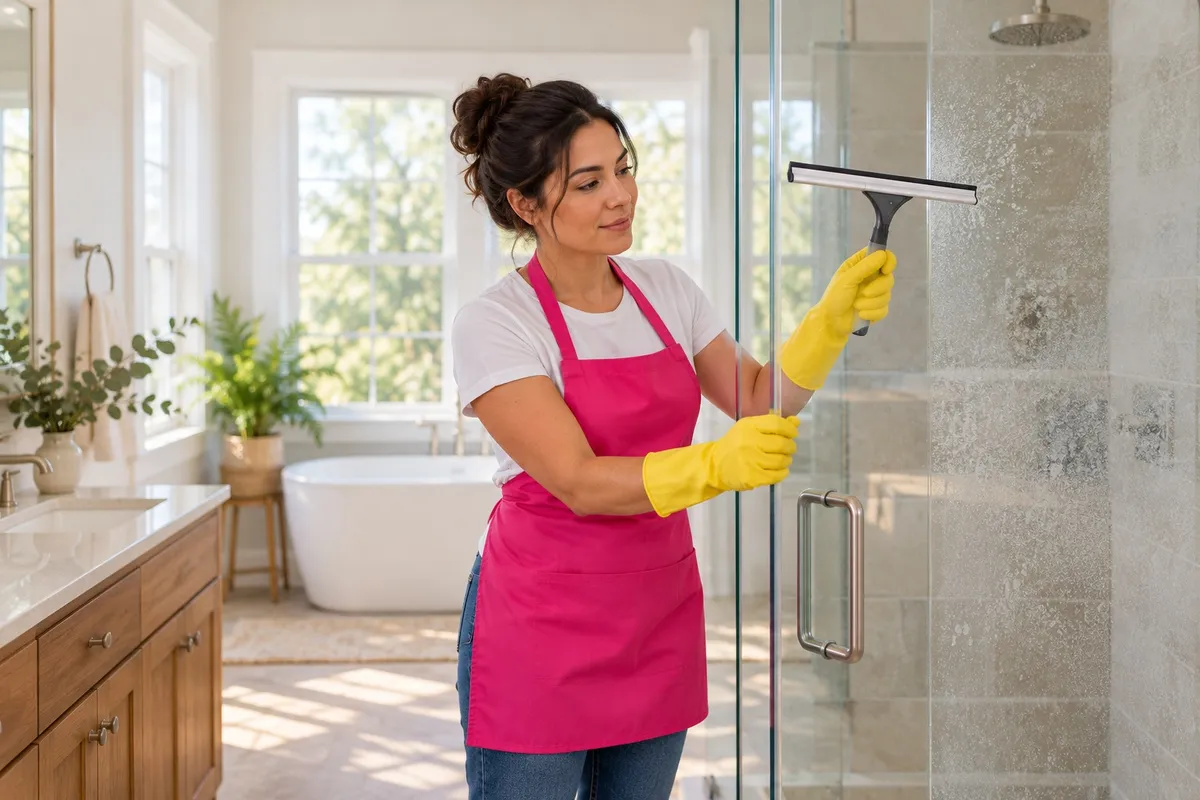
How to remove limescale from a glass shower door
To remove limescale from shower glass, run the shower hot for a few minutes, spray the glass with warm white vinegar, let it sit for 15 minutes, scrub with a non-scratch pad, rinse, and squeegee dry. Thick buildup takes a baking soda and vinegar paste and a second round. Then squeegee after every shower so it doesn't come back.
What is limescale, and how is it different from soap scum?
Limescale is the chalky white film left when hard water dries. The water evaporates and the calcium and magnesium stay on the glass. Soap scum is a waxy film from soap reacting with those same minerals. On a shower door you usually have both, layered.
That matters because they need different things. Acid dissolves limescale. Soap scum needs a cleaner, heat and some scrubbing. Vinegar does a reasonable job on both, which is why it's the place to start.
What do you need?
- White vinegar, warmed in the microwave until warm to the touch, not hot
- A spray bottle
- Baking soda
- A non-scratch scrub pad or sponge
- A squeegee
- Two microfiber cloths
- An old toothbrush, for the tracks and the bottom seal
- Rubber gloves
How do you remove limescale step by step?
- Heat the glass. Run the shower hot for three or four minutes with the door closed. Warm glass and steam soften the film.
- Spray with warm vinegar. Coat the inside of the glass from top to bottom. Warm vinegar works faster than cold.
- Wait 15 minutes. If the vinegar runs off before it has time to work, lay vinegar-soaked paper towels on the worst areas so they stay wet.
- Scrub. Use the non-scratch pad in overlapping circles. Pay attention to the bottom third of the door, where water sits longest.
- Rinse. Rinse with plain warm water so no vinegar dries on the glass or the metal.
- Squeegee and dry. Squeegee top to bottom, overlapping each stroke, then dry the edges and the frame with a microfiber cloth.
What if the buildup is thick?
Mix baking soda with enough vinegar to make a paste. It will fizz, so do it in a bowl. Spread it on the crusted areas, leave it 20 to 30 minutes and scrub with the non-scratch pad. Rinse well and repeat if you still see white.
A cut lemon rubbed on the glass works on small spots too. It's the same idea, a mild acid, just harder to spread over a whole door.
How do you clean the tracks and seals?
The bottom track and the rubber seal hold standing water, so limescale and mildew build up there first. Spray them with vinegar, leave it 10 minutes, then scrub with the toothbrush and wipe out the gunk with a cloth. Dry the track when you're done.
If the seal is black inside and won't come clean, the mildew has grown into the rubber.
What should you not do?
- Don't use razor blades or steel wool on glass with a factory protective coating. Check your door's manual. On uncoated glass, a razor scraper held flat can lift stubborn spots, but one slip leaves a permanent scratch.
- Don't let vinegar sit on marble or stone around the shower. It etches stone. Wipe up drips right away.
- Never mix vinegar with bleach. The fumes are dangerous.
If the glass is still hazy once it's completely dry, the minerals may have etched the surface. That's damage to the glass itself, and no cleaner reverses it. To tell the difference, wet the glass. Mineral buildup stays visible when wet. Etching tends to vanish while the glass is wet and come back as it dries.
How do you keep limescale from coming back?
- Squeegee the glass after every shower. It takes about 20 seconds.
- Leave the door open and run the exhaust fan so the stall dries.
- Do the vinegar clean every two weeks in a hard water home, monthly otherwise.
For the rest of the shower, see how to clean bathroom tiles and how to clean chrome bathroom fixtures.
What a house cleaning covers
Standard House Cleaning, RoutineCare, cleans the shower door glass and tracks, the tub, shower and tiled walls, and the fixtures and drains.
On Deep Cleaning, PureRenewal, the shower door glass and tracks are descaled, and the tub, shower and tiled walls are scrubbed with the soap scum and grout treated. Every item on the list is cleaned whether or not it looks like it needs it.
FAQ
What removes limescale from shower glass? A mild acid. Warm white vinegar sprayed on and left for 15 minutes dissolves light to moderate limescale, and a paste of baking soda and vinegar works on thicker crust. Rinse well and squeegee dry afterward.
Why is my shower glass still cloudy after cleaning? Wet the glass and look again. If the haze stays visible while wet, it's buildup and another round of vinegar will help. If it vanishes while wet and returns when dry, it's likely etching, where minerals have pitted the surface, and that doesn't wipe off.
Can I use a melamine sponge on shower glass? A melamine sponge is mildly abrasive. Test it on a corner first, use it wet and with light pressure, and don't use it on glass with a factory protective coating, because it can wear the coating off.
How do I keep shower glass from getting hard water spots? Squeegee the glass after every shower and leave the door open so the stall dries. Water that dries on the glass leaves its minerals behind, so a dry door stays clear much longer.
Does a house cleaning include the shower door glass? Yes. Standard House Cleaning cleans the shower door glass and tracks, and Deep Cleaning descales them.
Book a cleaning
We clean homes across South Jersey and Central Jersey. Book online at tinascleanteam.com/book-now, or call or text (609) 831-4455.
