

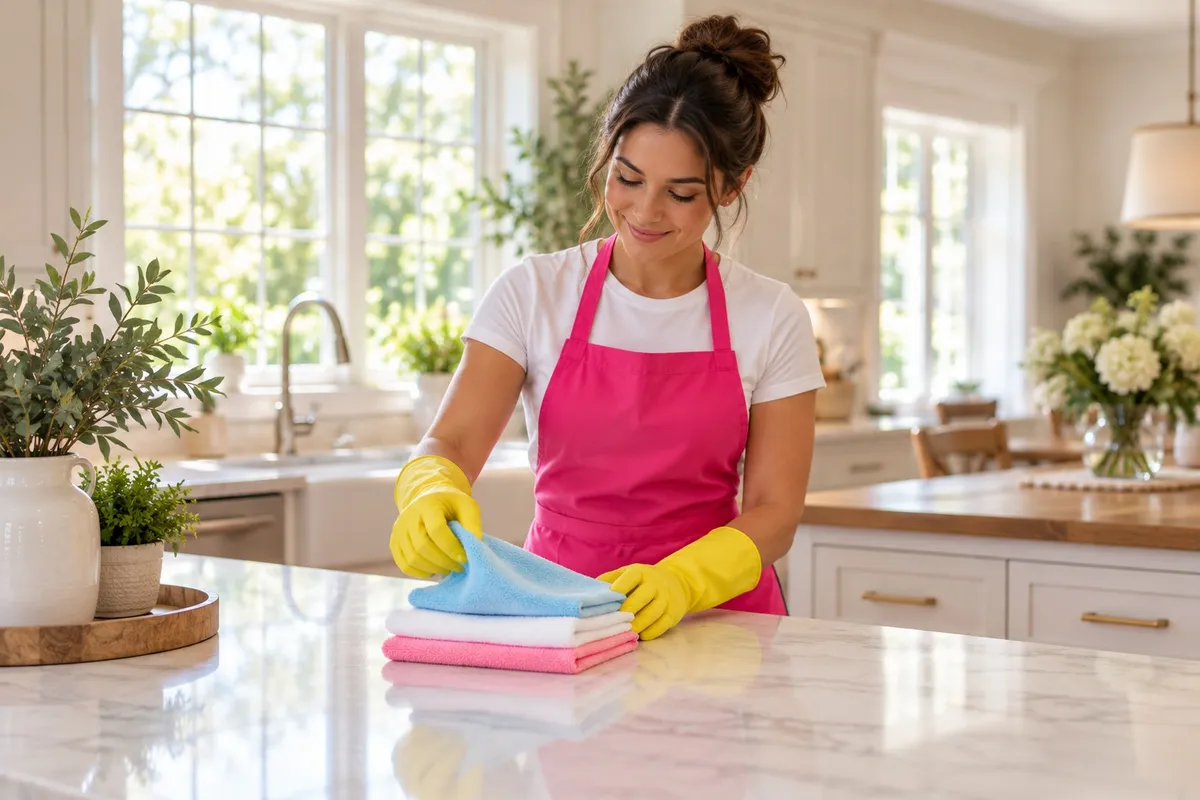
How to use and wash microfiber cloths
To use a microfiber cloth, fold it in quarters, use it dry for dust and barely damp with plain water for many surfaces, and turn to a clean side as each face gets dirty. Buff glass and stainless with a second dry cloth. Wash them separately in warm water with a little detergent, no fabric softener, and dry them on low heat or air dry.
Why do microfiber cloths clean better than cotton rags?
The fibers are split much finer than cotton, so each cloth has a huge amount of surface for dust, grease and grime to cling to. A cotton rag pushes dust around. A microfiber cloth picks it up and holds it until you wash it.
That's also why you need less product. On glass, mirrors, stainless steel and dusty shelves, plain water and a good cloth do a lot of the work.
How do you use a microfiber cloth step by step?
- Fold it in half, then in half again. That gives you eight working faces instead of one big floppy cloth.
- Dry or damp? Dry for dusting, electronics and buffing. For wiping counters, appliance fronts and glass, mist the cloth with water until it feels barely damp. If water drips when you squeeze it, it's too wet.
- Wipe in straight lines. Overlap each pass slightly. Circles look busy and push dirt to the edges.
- Flip to a clean face as soon as the one you're using looks gray or stops gliding.
- Buff with a dry cloth on glass, mirrors, chrome and stainless. Go with the grain on stainless.
- Swap cloths between rooms. Don't take the bathroom cloth to the kitchen counter.
Which cloth for which job?
You don't need a dozen specialty products, but three kinds are worth having:
- General purpose (short, plush pile): counters, appliance fronts, shelves, dusting.
- Flat or waffle weave: glass, mirrors, windows and shower doors. The flat surface leaves fewer streaks.
- Thicker, fluffy cloths: buffing, drying and polishing.
Pick a color for each zone and stick to it: one color for toilets and bathrooms, one for the kitchen, one for glass, one for dusting. Write the system down on the inside of the cleaning cabinet door so everyone in the house uses the same one.
What shouldn't you clean with microfiber?
- Heavy grease like a range hood filter or a greasy stovetop. Loosen it first with hot water and dish soap or a degreaser, then wipe with microfiber. Thick grease gets packed into the fibers and is hard to wash out.
- Anything abrasive like sand, glitter or broken glass. Grit stuck in the fibers can scratch the next surface you wipe.
- Bleach jobs. Bleach breaks down the fibers. Use a separate cloth or a paper towel.
How do you wash microfiber cloths?
- Wash them on their own, or only with other microfiber. Cotton towels shed lint, and microfiber grabs every bit of it.
- Warm water, not boiling hot. Very high heat can melt the fine fibers.
- A small amount of plain liquid detergent. Too much leaves residue in the fibers.
- No fabric softener, no dryer sheets, no bleach. Softener coats the fibers and they stop picking anything up.
- Air dry, or tumble dry on low.
- Rinse greasy kitchen cloths in hot soapy water first before they go in the wash with the rest.
If a cloth has gone stiff or streaky, soak it for an hour in hot water with a little dish soap, then wash it as above. That often brings it back. If it doesn't, retire it to the garage.
How do you know when to replace a microfiber cloth?
Replace it when it feels smooth or stiff instead of grippy, when it stops picking up dust, when it leaves lint, or when the stains don't wash out. A cloth that looks clean but just slides across the counter has done its job.
For putting them to work, see how to dust your home and how to get kitchen chrome to shine.
What supplies are provided for a house cleaning?
Standard supplies and equipment are provided for the service you select.
On a Standard House Cleaning, RoutineCare, mirrors and glass surfaces are cleaned, reachable surfaces and furniture are dusted, and the exteriors of the kitchen appliances present are cleaned.
See what's covered at House Cleaning.
FAQ
Do you use microfiber cloths wet or dry? Both. Dry for dust, electronics and buffing, and barely damp with water for wiping. A dripping wet cloth loses its grip and leaves streaks.
Can you clean with just water and a microfiber cloth? For dust, fingerprints, glass and light everyday grime, yes. Grease, soap scum and sticky spills still need a little dish soap or a cleaner to loosen them first.
Why is my microfiber cloth leaving streaks? It's usually too wet, dirty, or coated with fabric softener or dryer sheet residue. Wash it on its own in warm water with a small amount of detergent, skip the softener, and use a second dry cloth to buff.
How long do microfiber cloths last? Good ones hold up for a long time if you wash them right. Replace a cloth when it feels stiff or smooth, stops picking up dust, or leaves lint.
Book a cleaning
We clean homes across South Jersey and Central Jersey. Book online at tinascleanteam.com/book-now, or call or text (609) 831-4455.
